01 — Visual Art
The canvas is where bodily knowledge is worked out in real time.
Intimate, mixed-media works in acrylic, ink, pastel, fabric, and found materials.
About the Artist
Tawanda Chabikwa is a Zimbabwean-born, interdisciplinary artist-scholar. His practice does not begin with a fully formed idea that painting subsequently illustrates. It begins in the body, and the canvas is where that bodily knowledge is worked out in real time. Chabikwa is curious about corpo-realities — the indigenous technologies that reside within the human body. Trained as a scholar in embodied research methodologies drawn from dance and performance studies, Chabikwa treats art-making itself as a mode of knowledge production — a form of research conducted in pigment, gesture, and material rather than prose, but no less rigorous for it. This is a claim worth taking seriously on its own terms: the studio functions here as a site of inquiry, not merely of illustration.
Chabikwa made his first artwork, Child of the Soil, at sixteen while studying in Hong Kong — a wood relief incorporating a plaster cast of his own face and hand, a figure breaking from the earth like a seedling toward the sun, carrying a question he'd already been living with since childhood: who is a person, once race, class, religion, age, gender, and memory are stripped away?
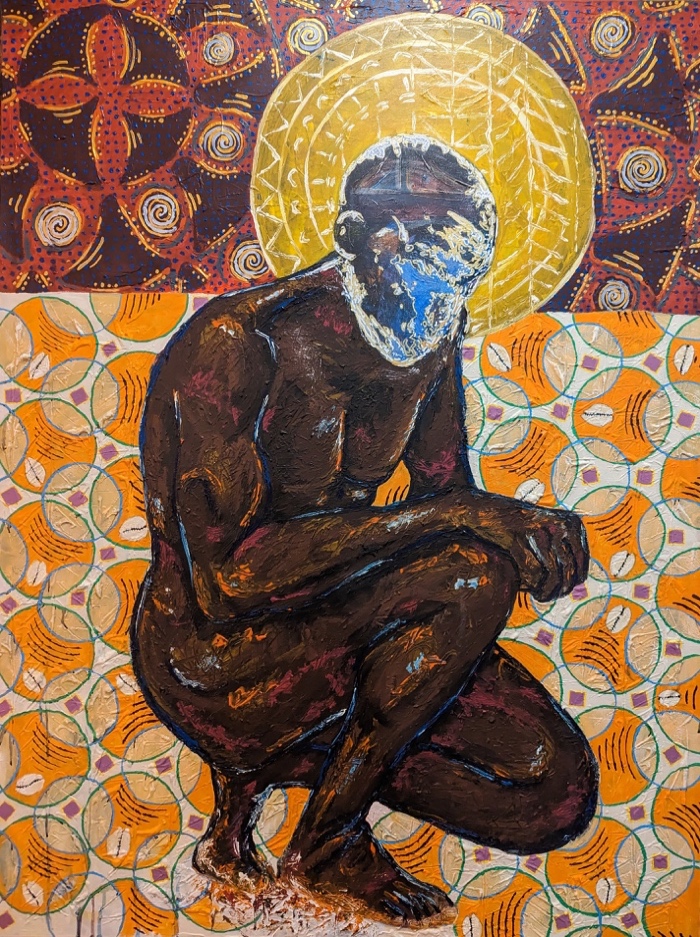
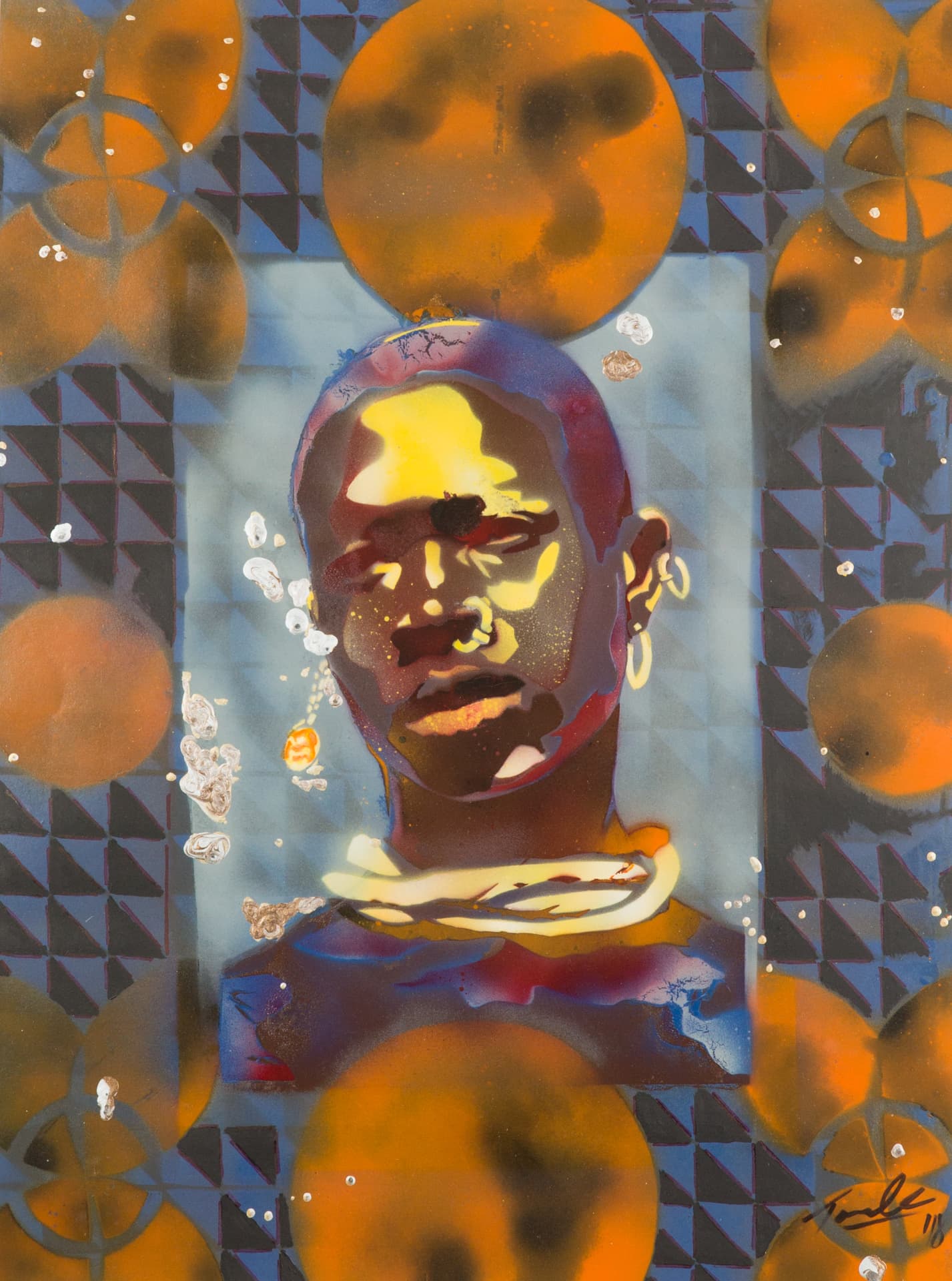
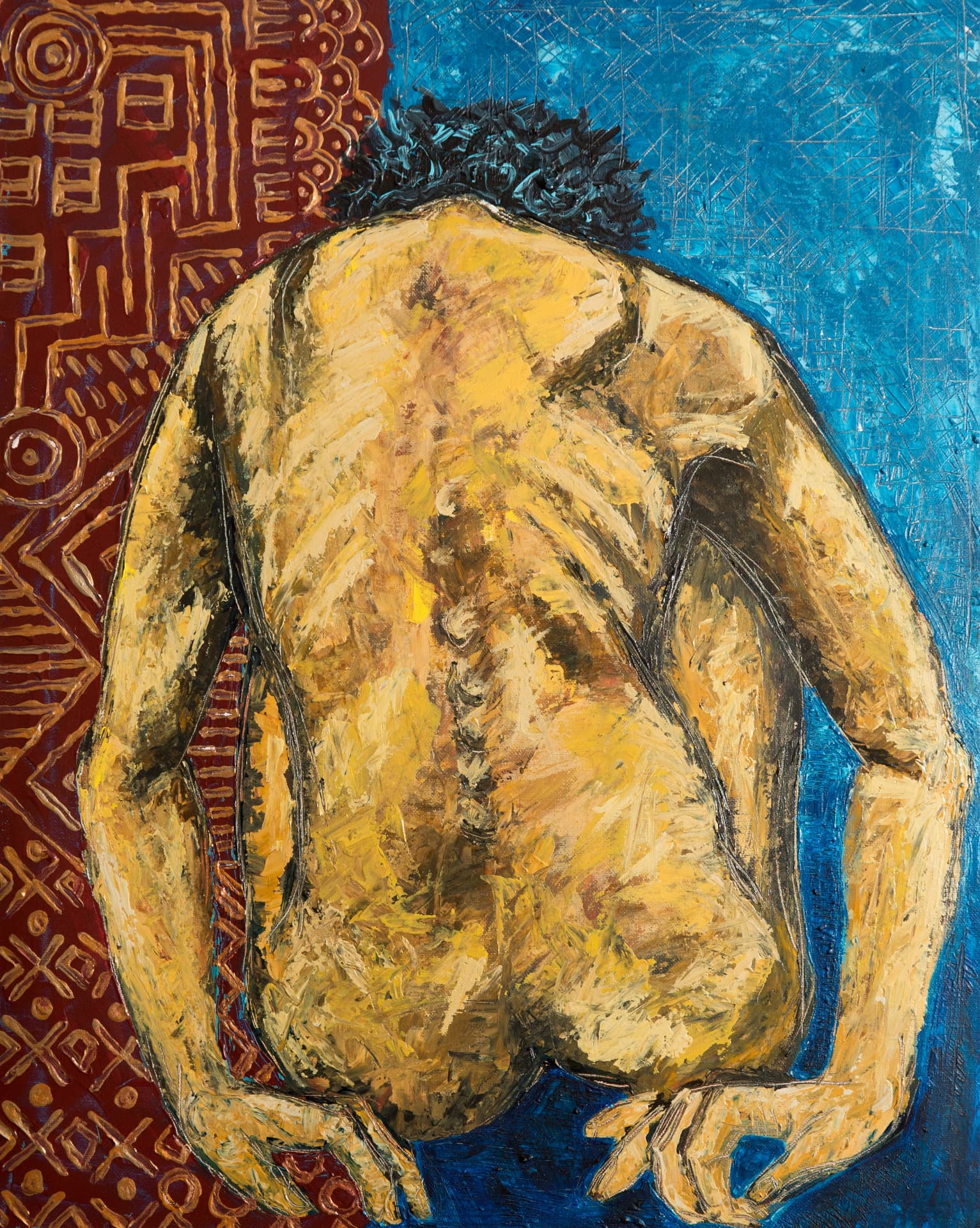
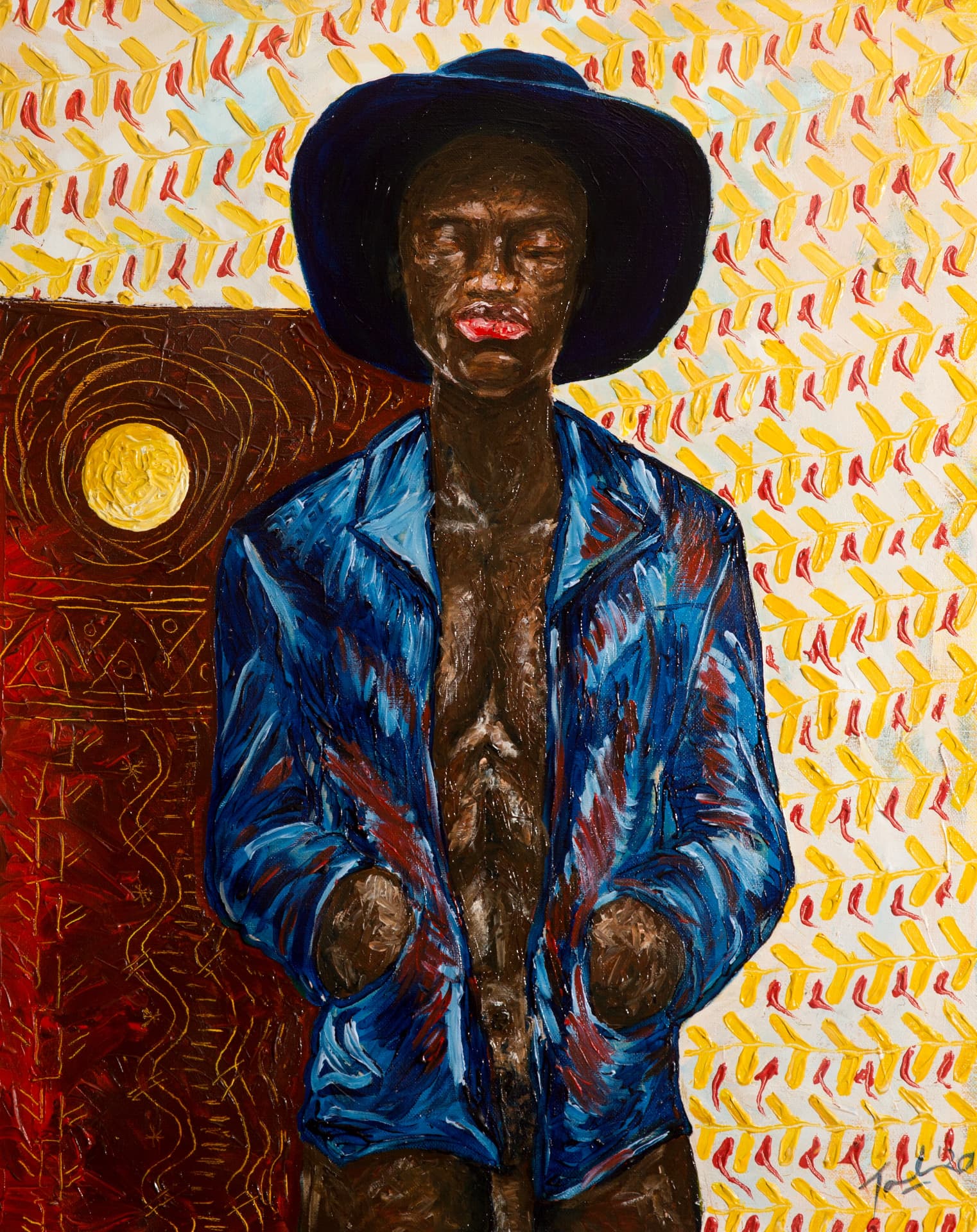
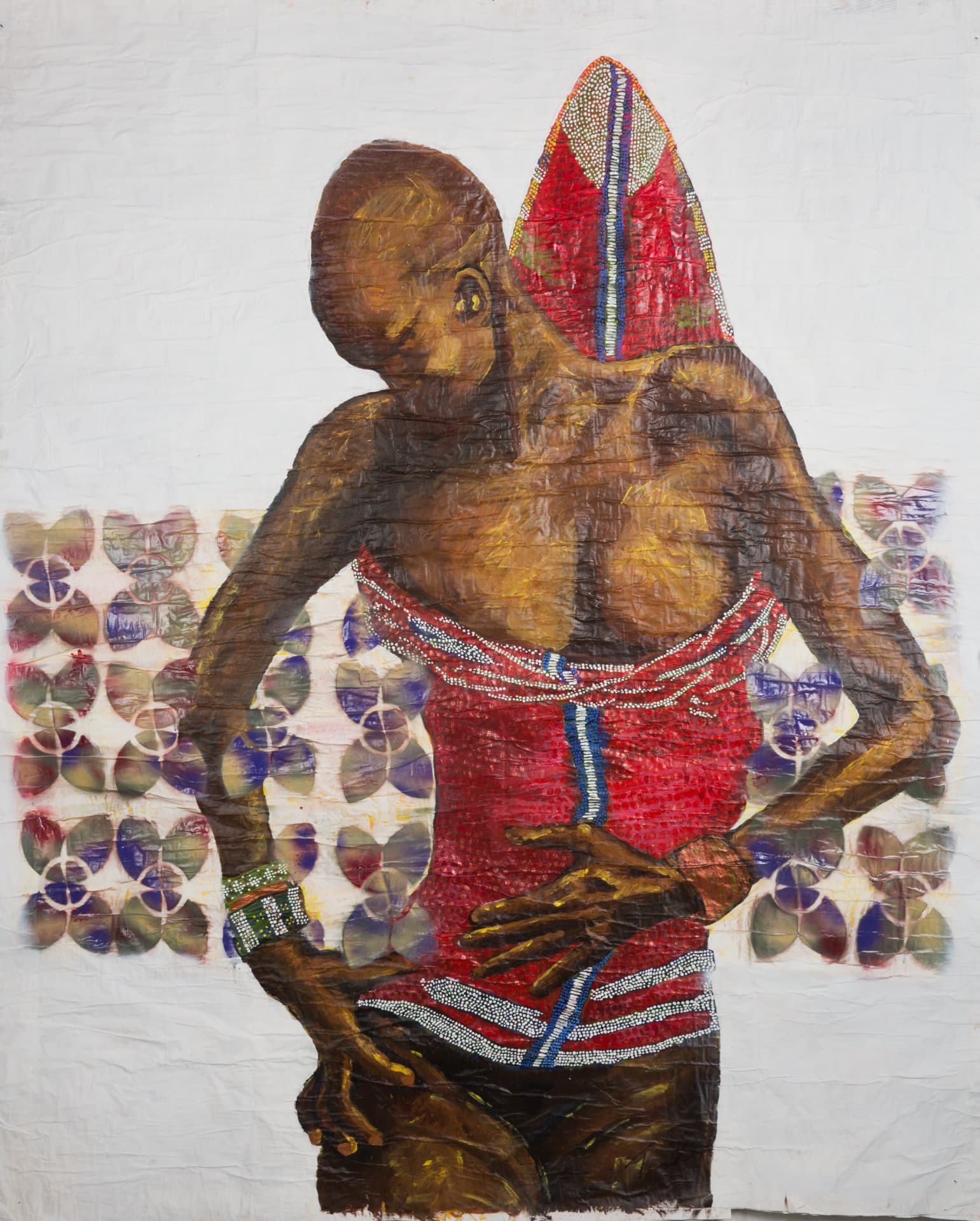
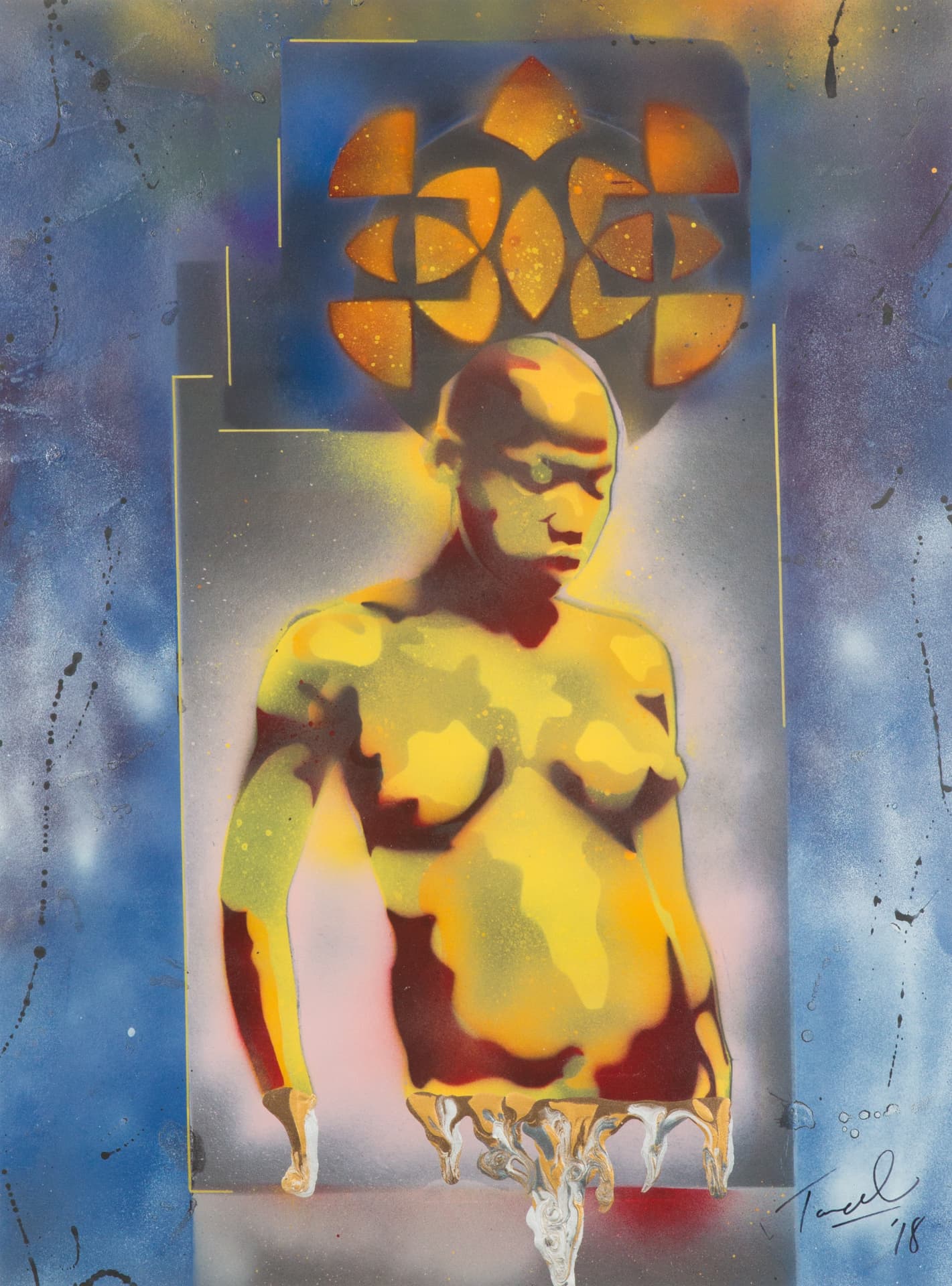
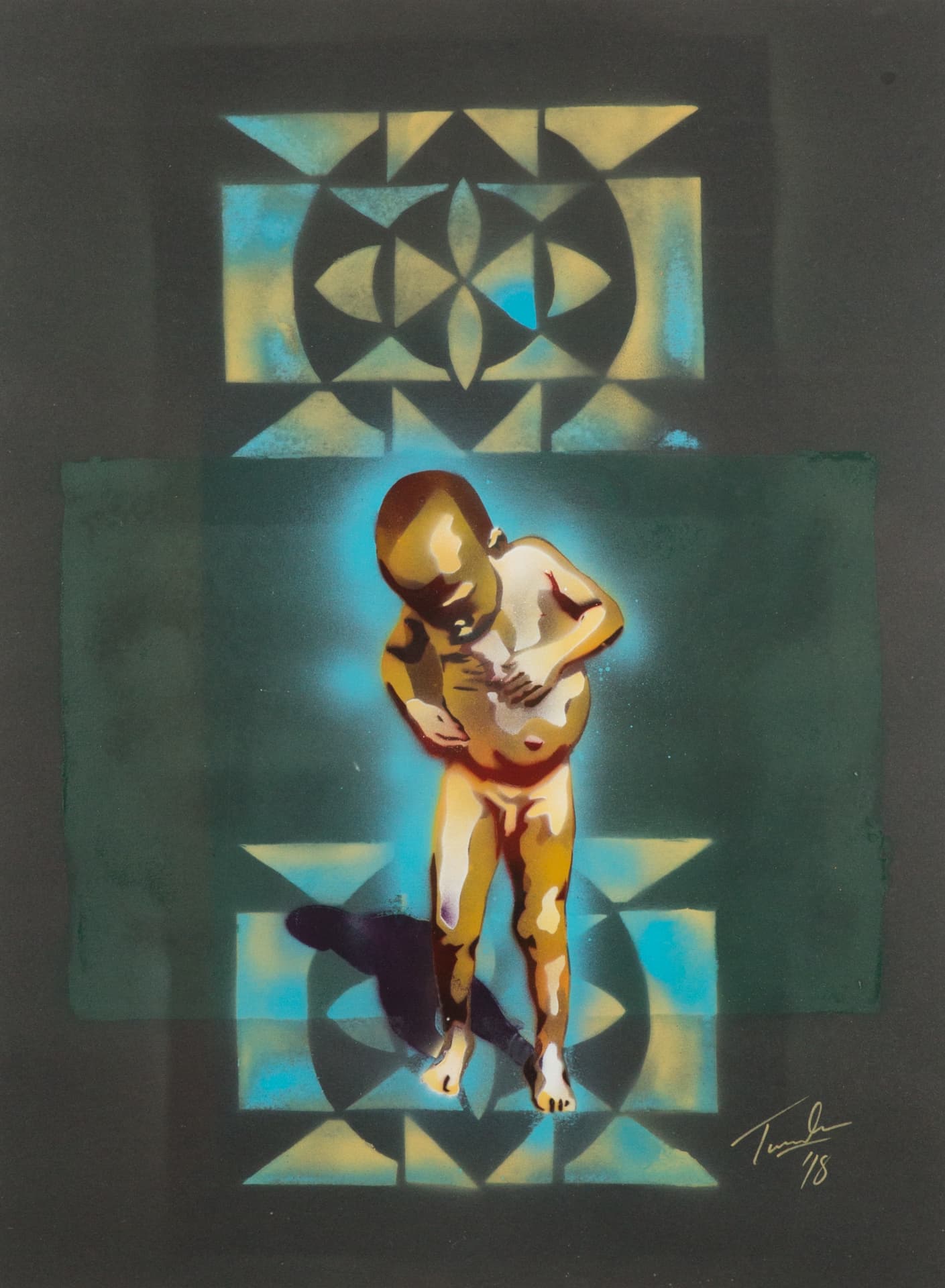
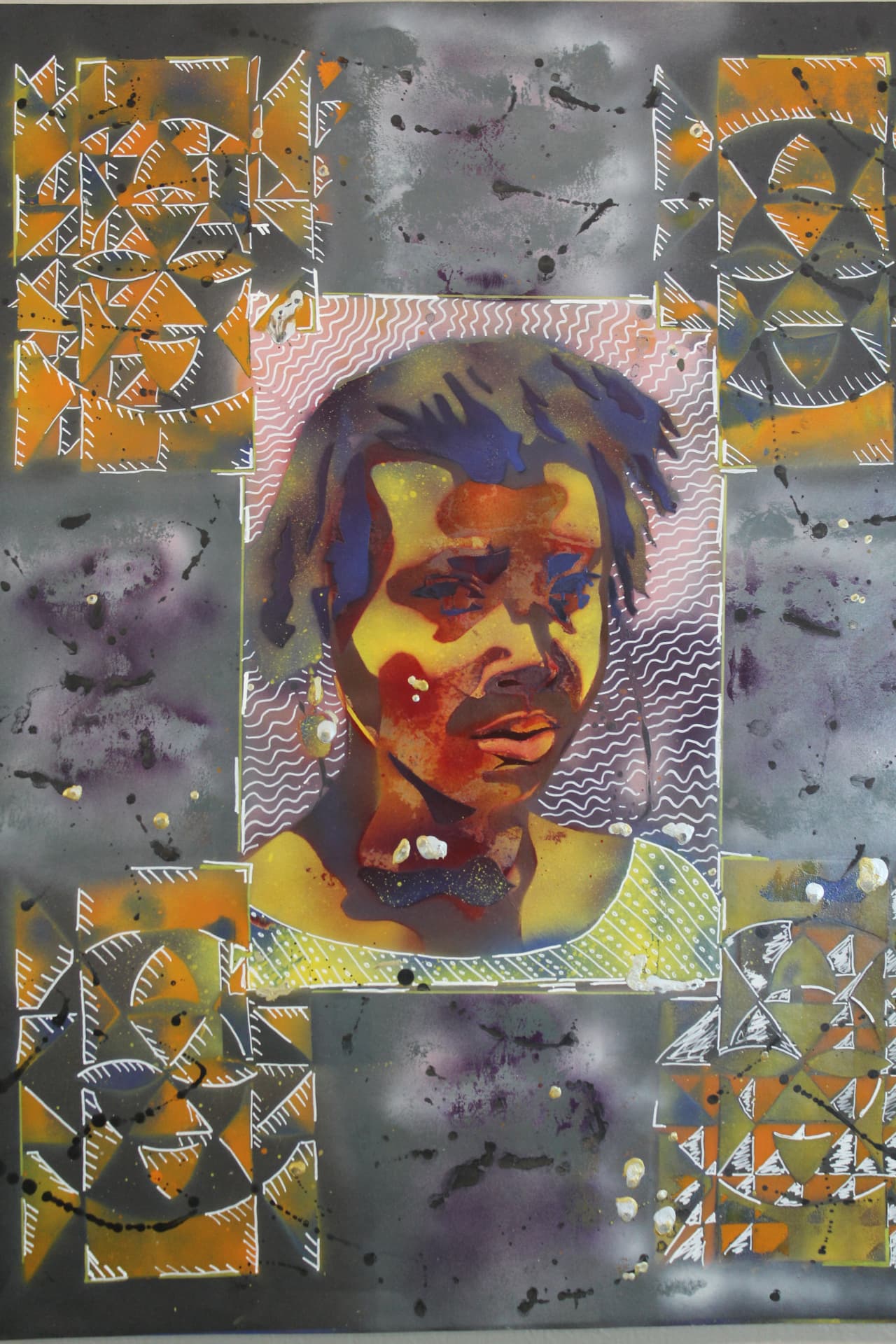
That inquiry centers on personhood — relational, ancestral, and always in motion — and on what Chabikwa terms “selfcraft”: the making of a self through aesthetic practice in Afrikan lifeworlds. Chabikwa's figures inhabit states of ritual and becoming, set against wax-print patterning, halos, and emblems such as the cowrie shell that root the work in Zimbabwean and broader Africana cosmologies, and in living traditions — ancestral memory, sacred forms such as mbira — the artist both studies and practices. Shape, texture, color, and collective memory, redressed, become what Chabikwa calls “gadgets of thought.”
The work is also corrective. Where the colonial photographic archive flattened its subjects into specimens, Chabikwa restores motion, breath, and interiority — joining a growing lineage of artists who use figuration to reclaim the personhood of Black, of-color, queer, and Indigenous people from historical misrepresentation.
What distinguishes Chabikwa is the scholarly architecture beneath the work. Rooted in a Shona and broader Africana cosmological inheritance yet fluent in the color, scale, and direct gaze that have carried a generation of African and diasporic figurative painters to the center of the global conversation, his paintings pair cultural specificity with conceptual depth.
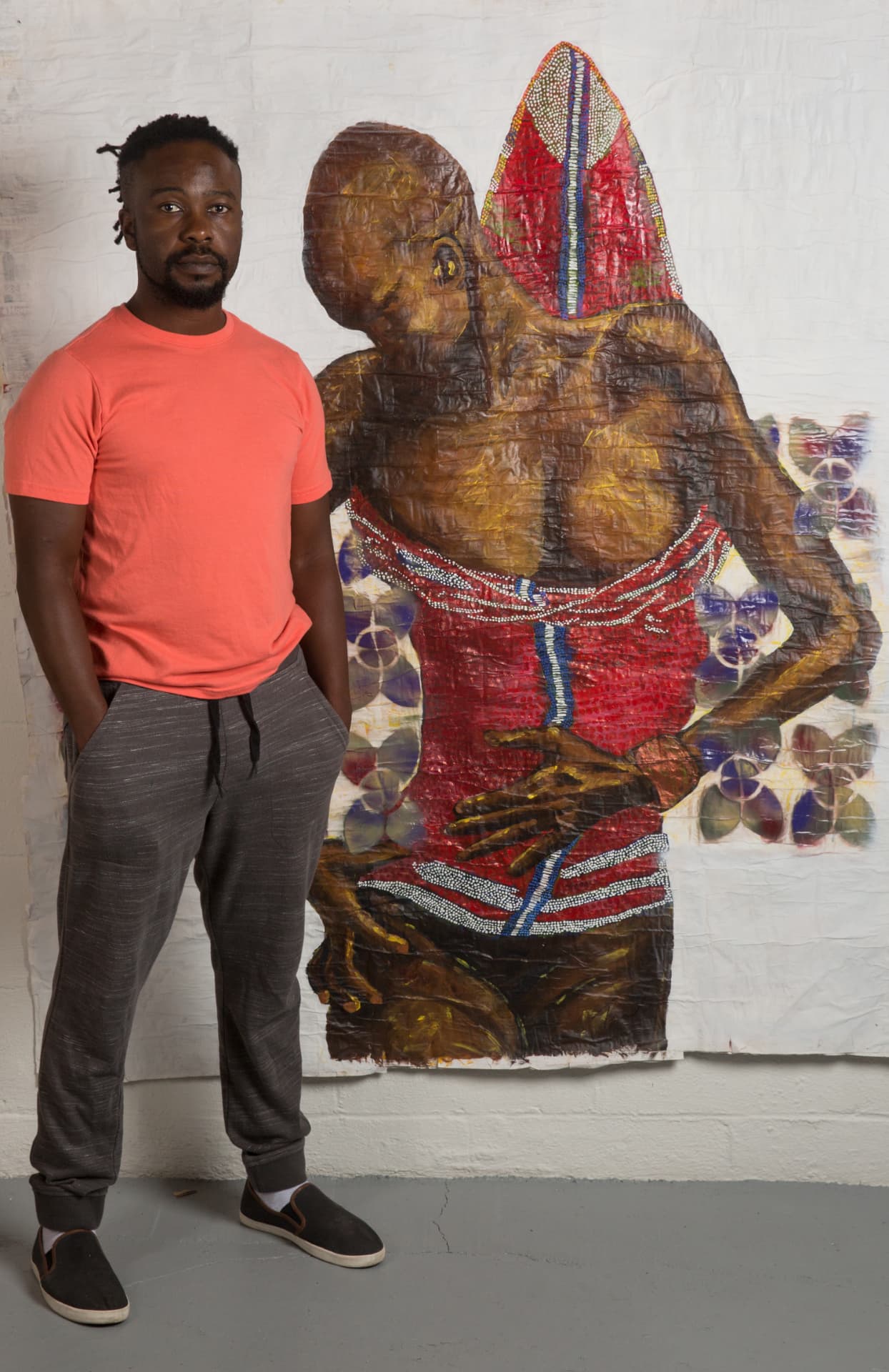
Pictured in front of phenomenal negress.
Photo: Lauren Pond.
Three tenets guide every part of Chabikwa's practice — Transformation, Contemplation, and Healing — and the studio is where they are first tested: each canvas is an act of transformation, a contemplative process, and a form of healing.
Artist Statement
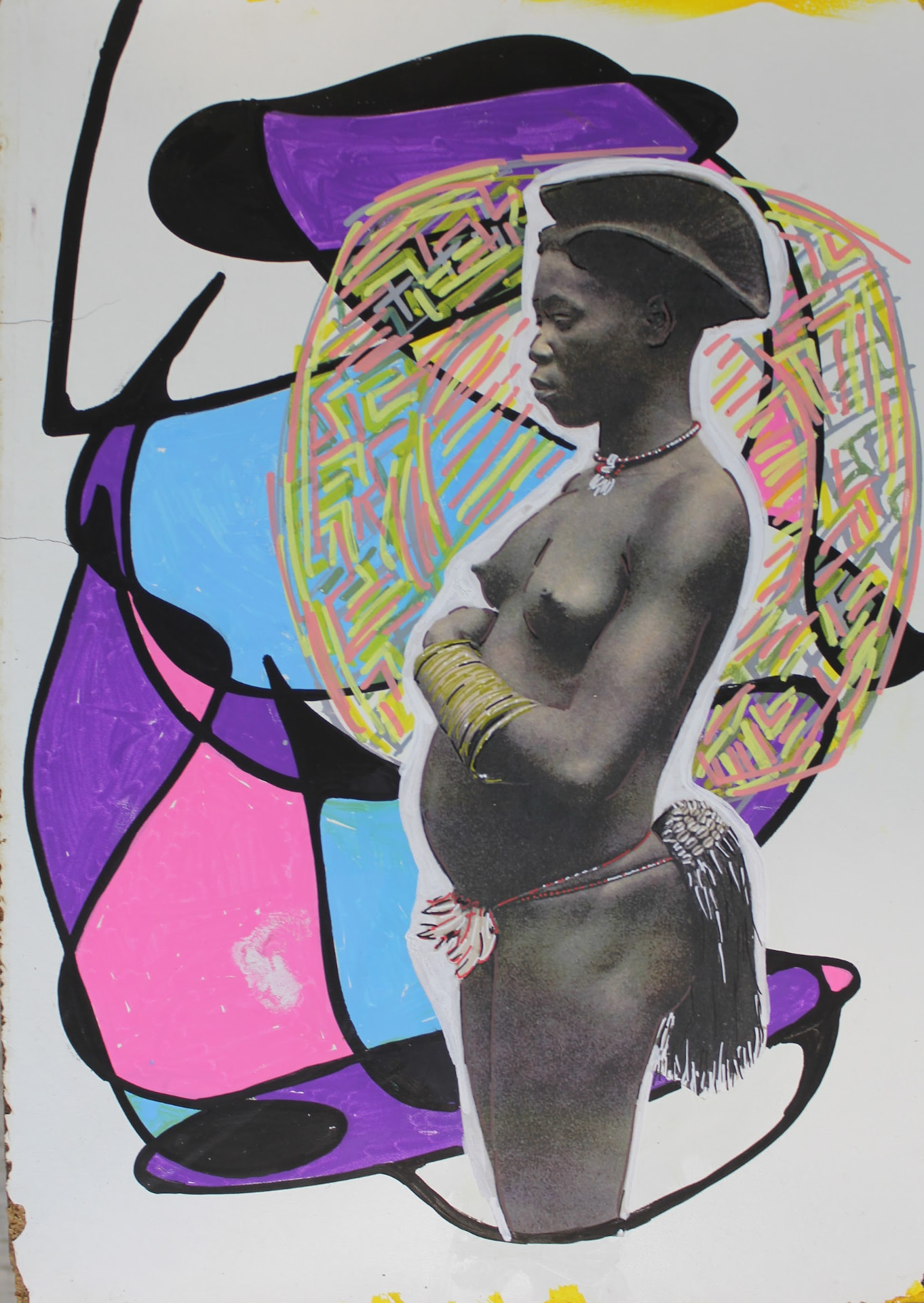
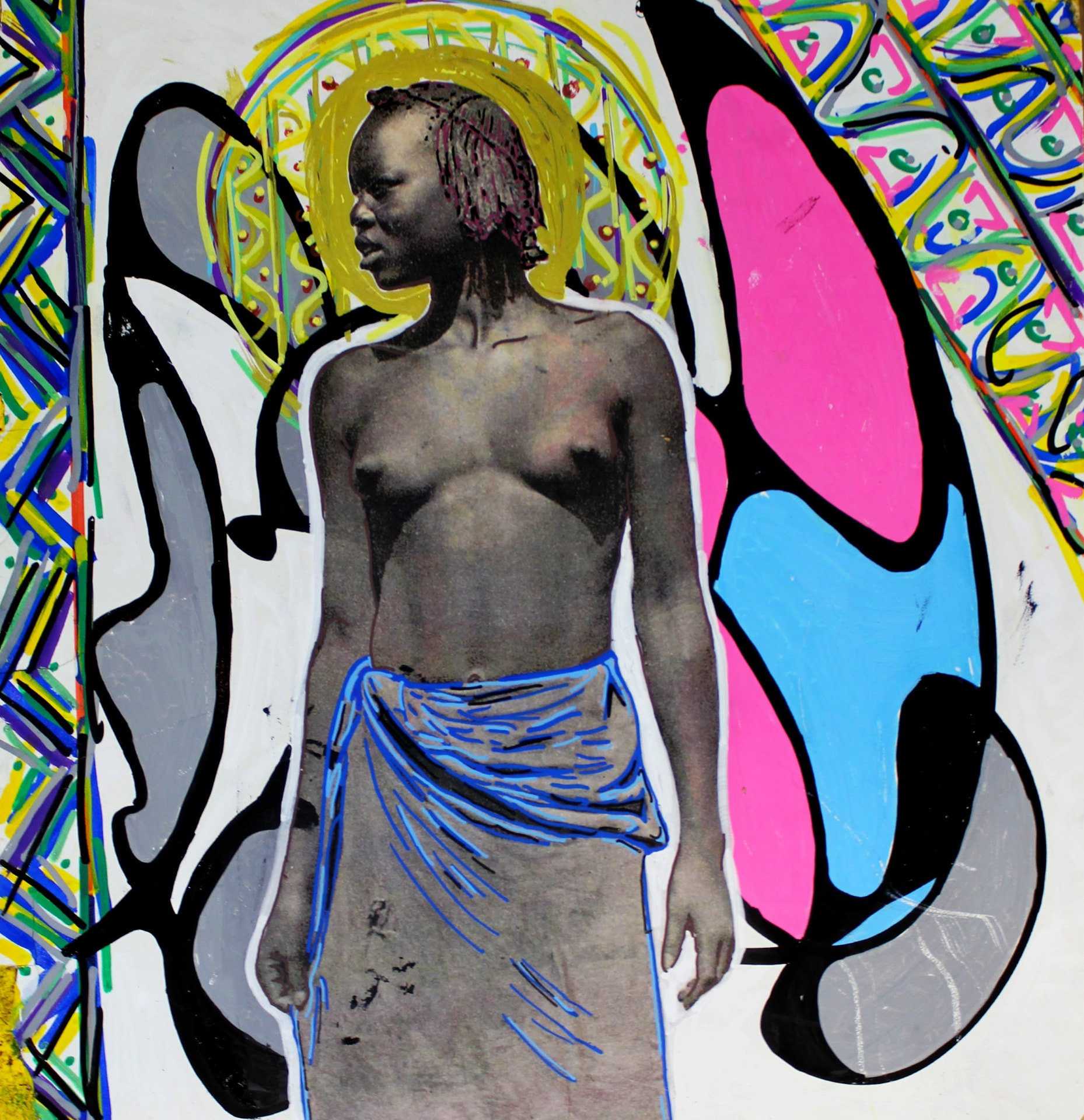
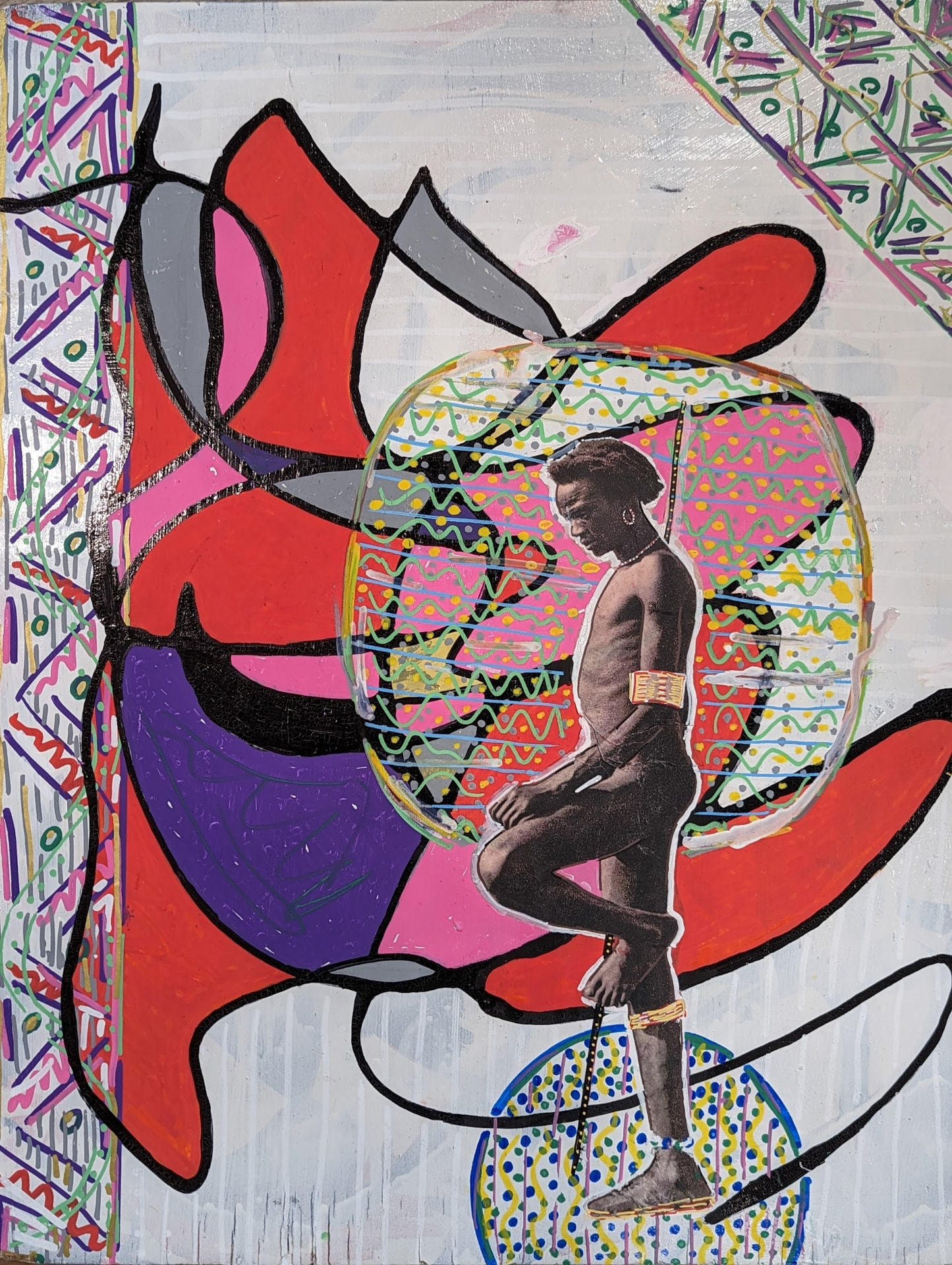
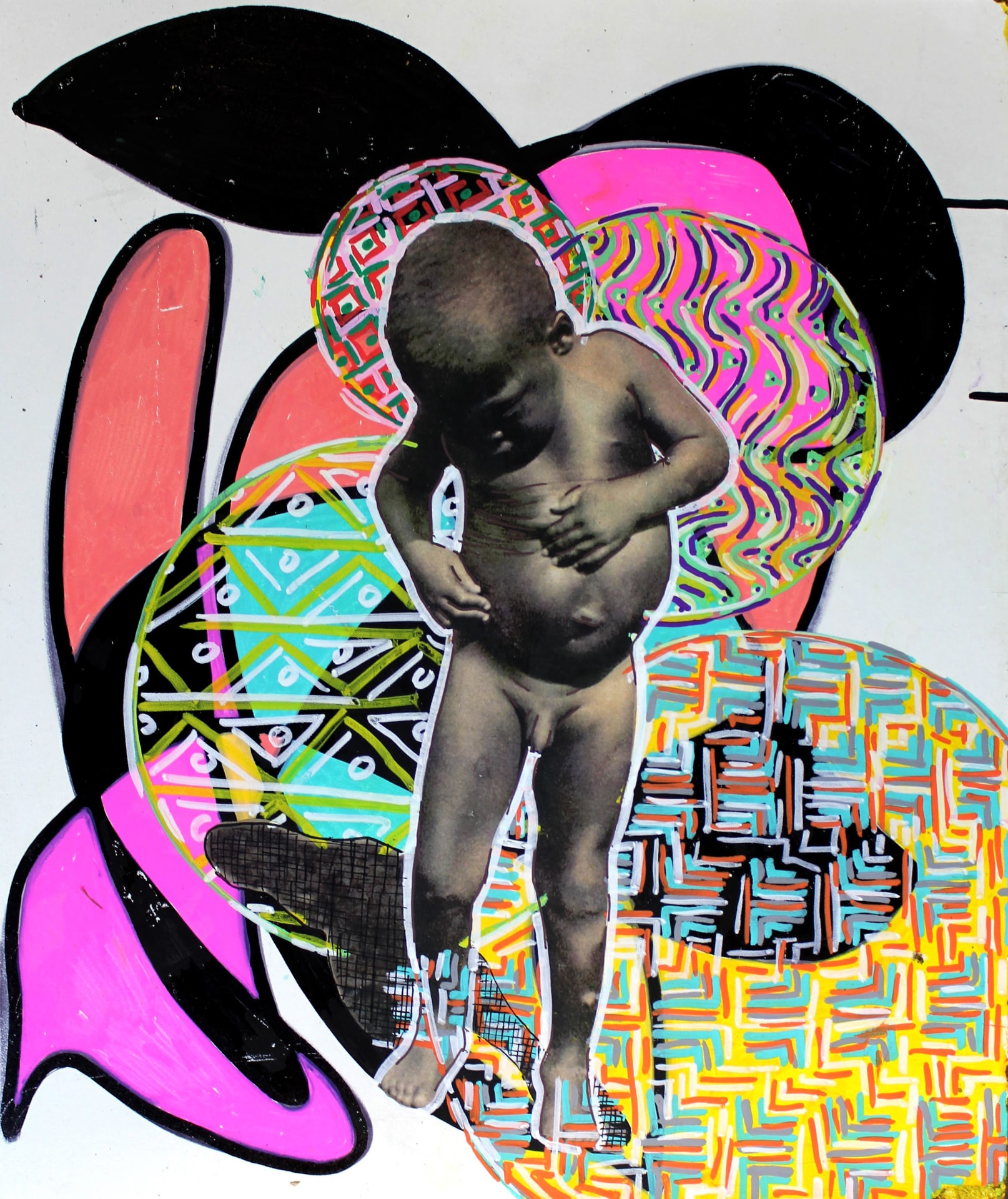
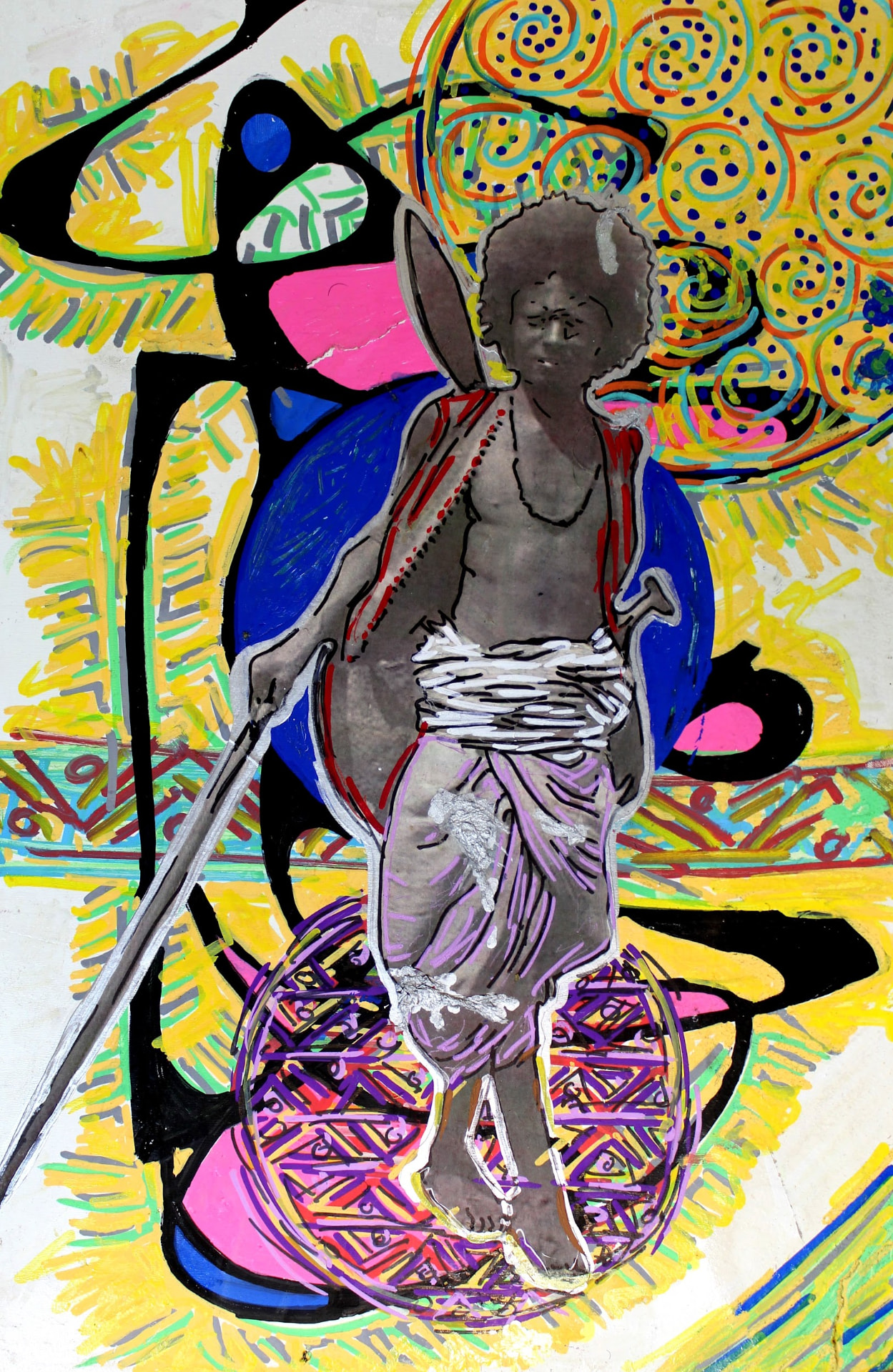
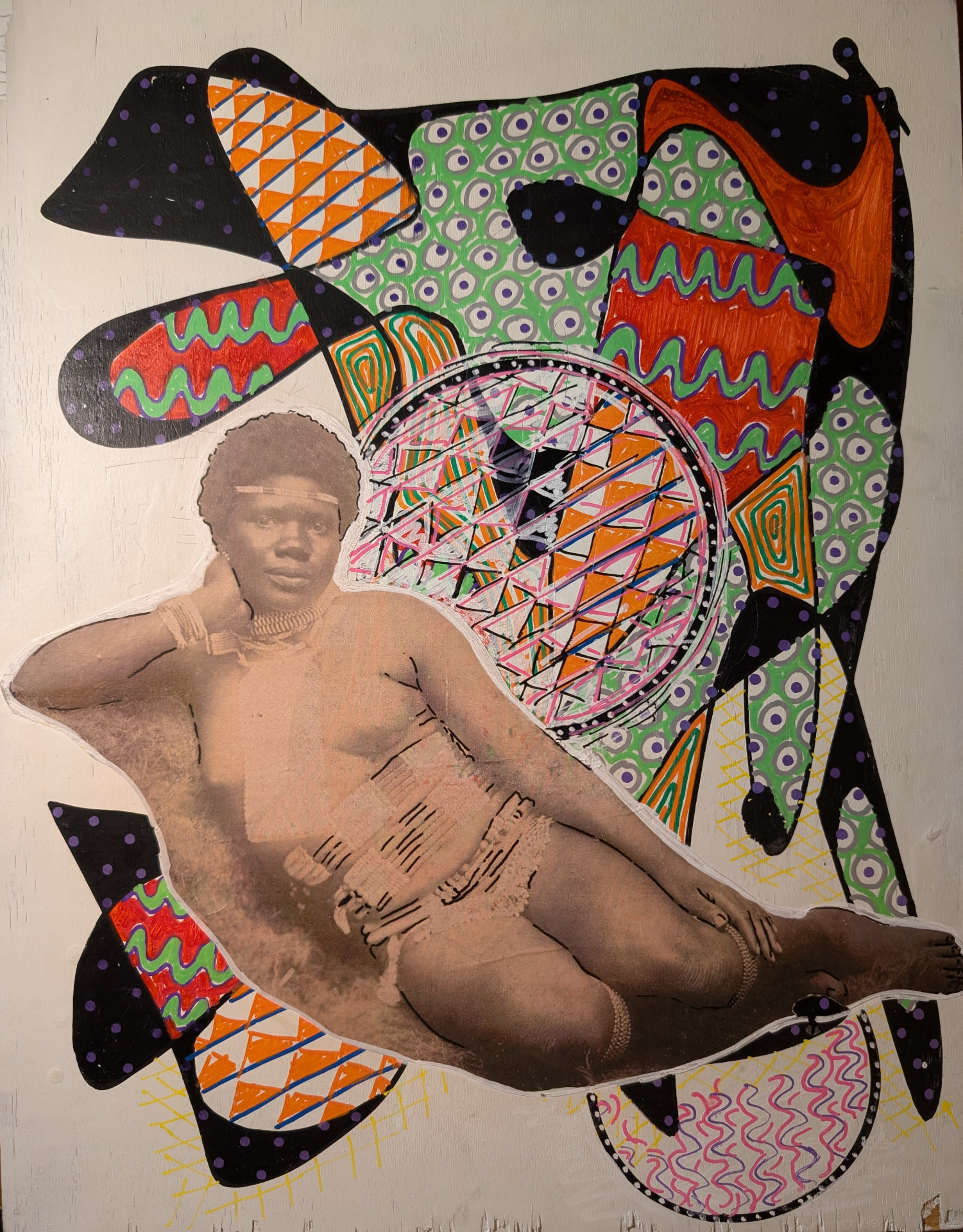
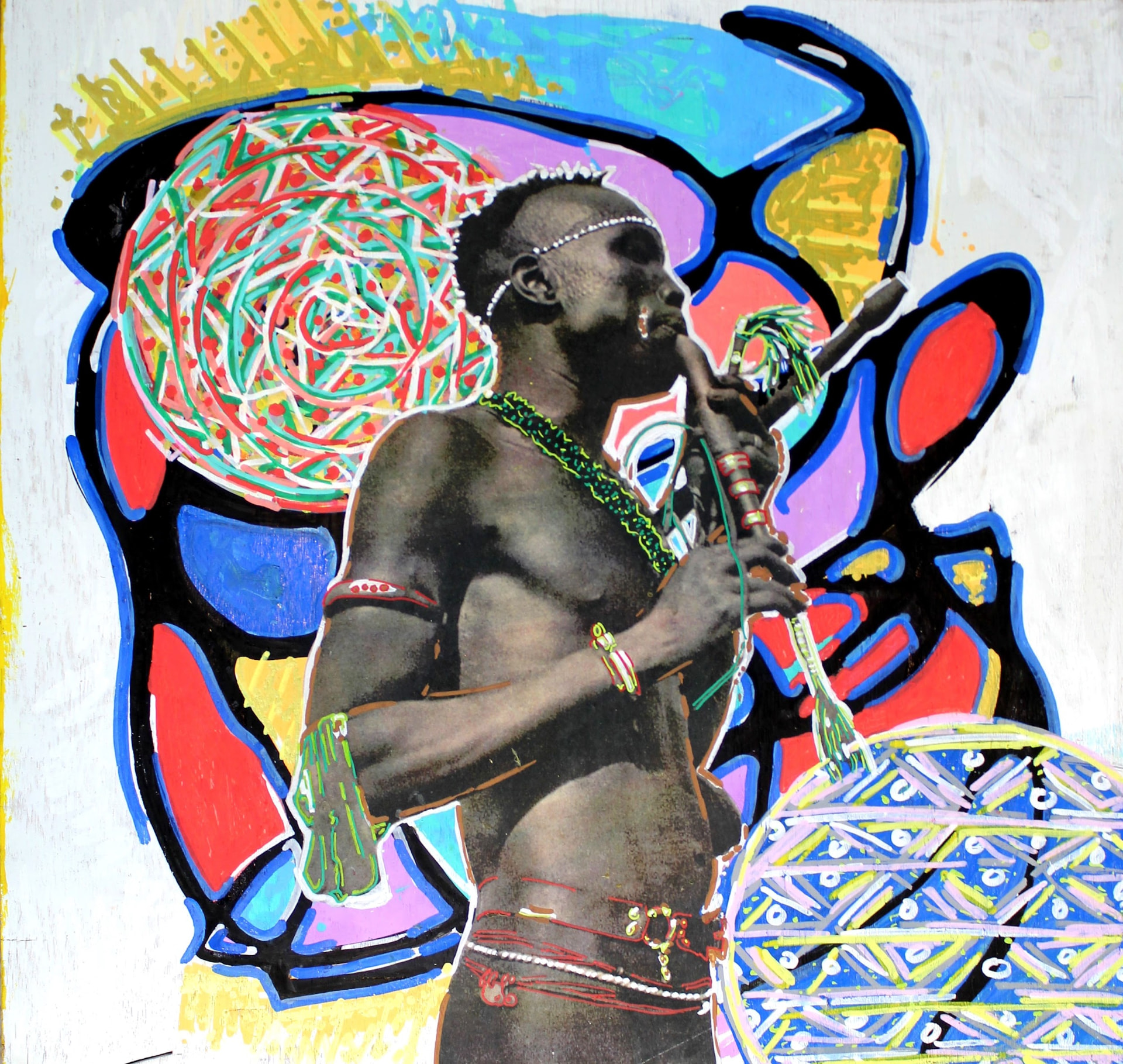
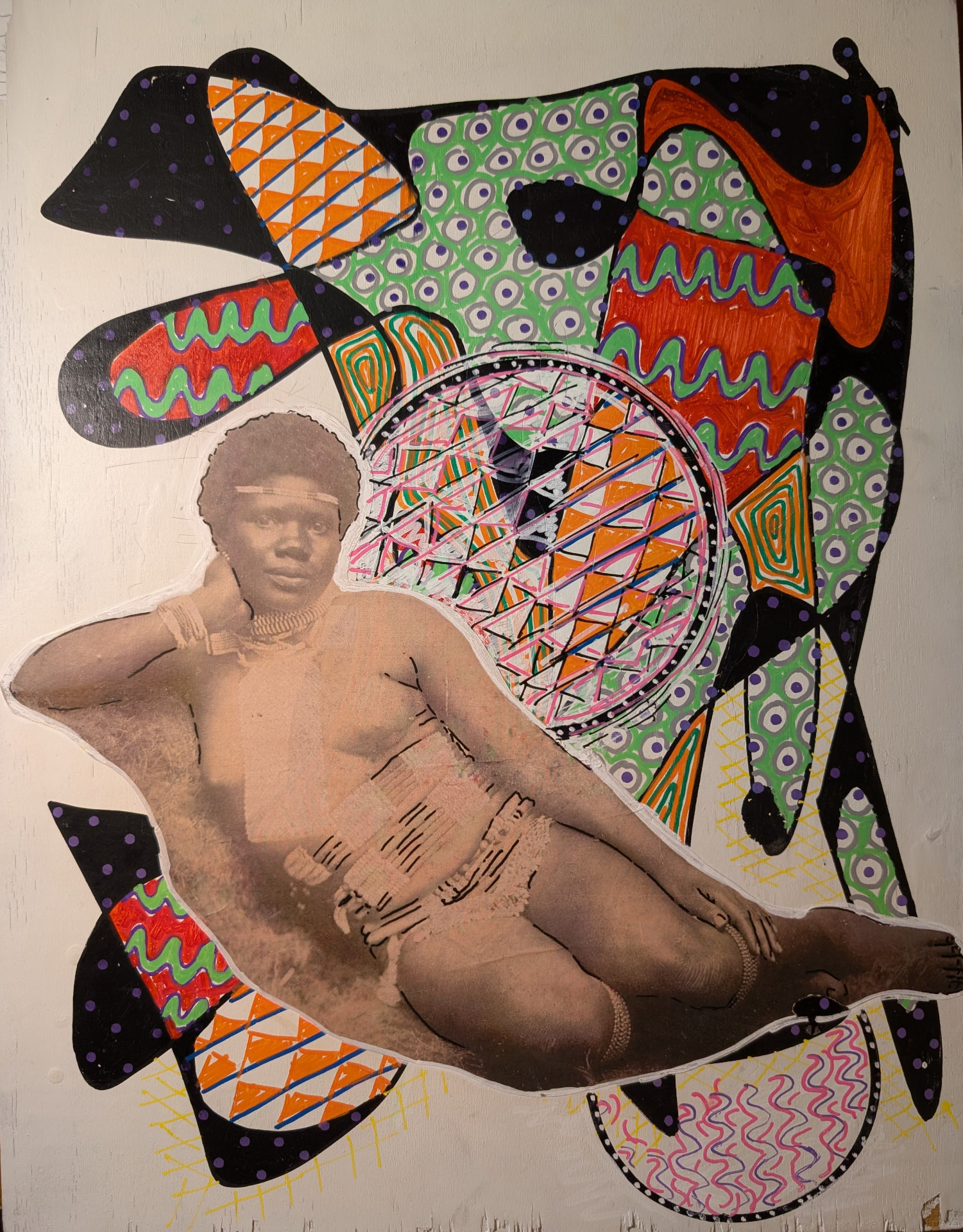
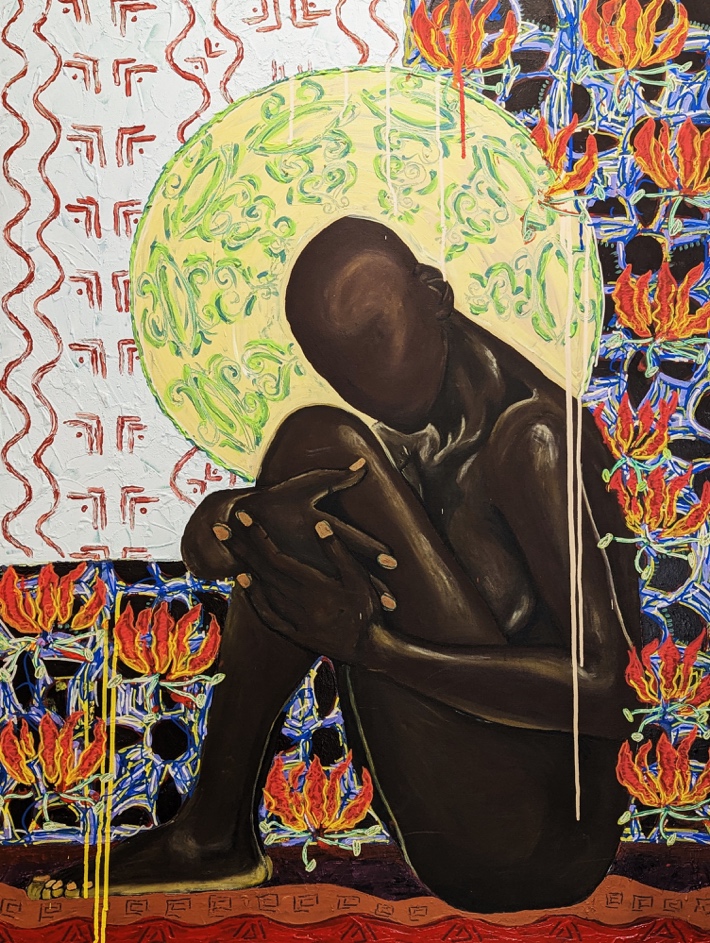
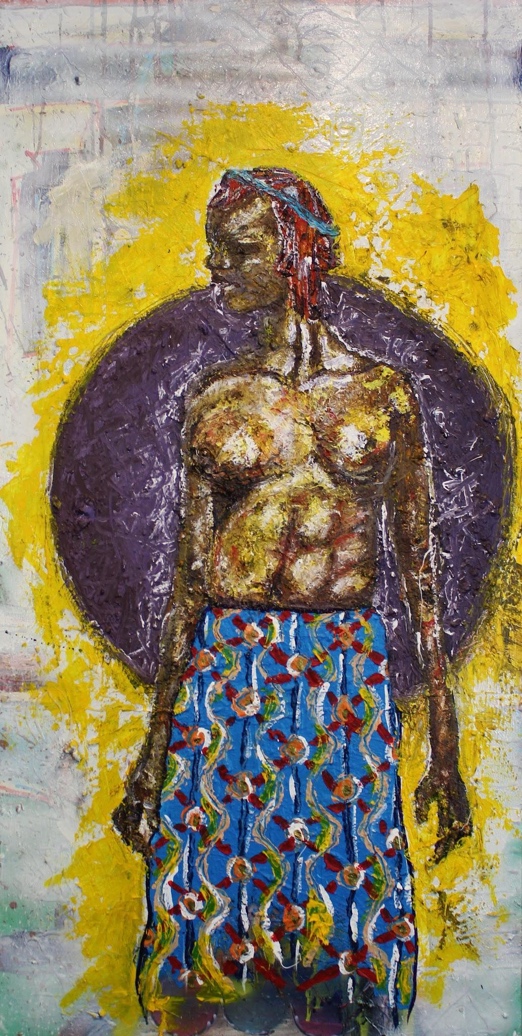
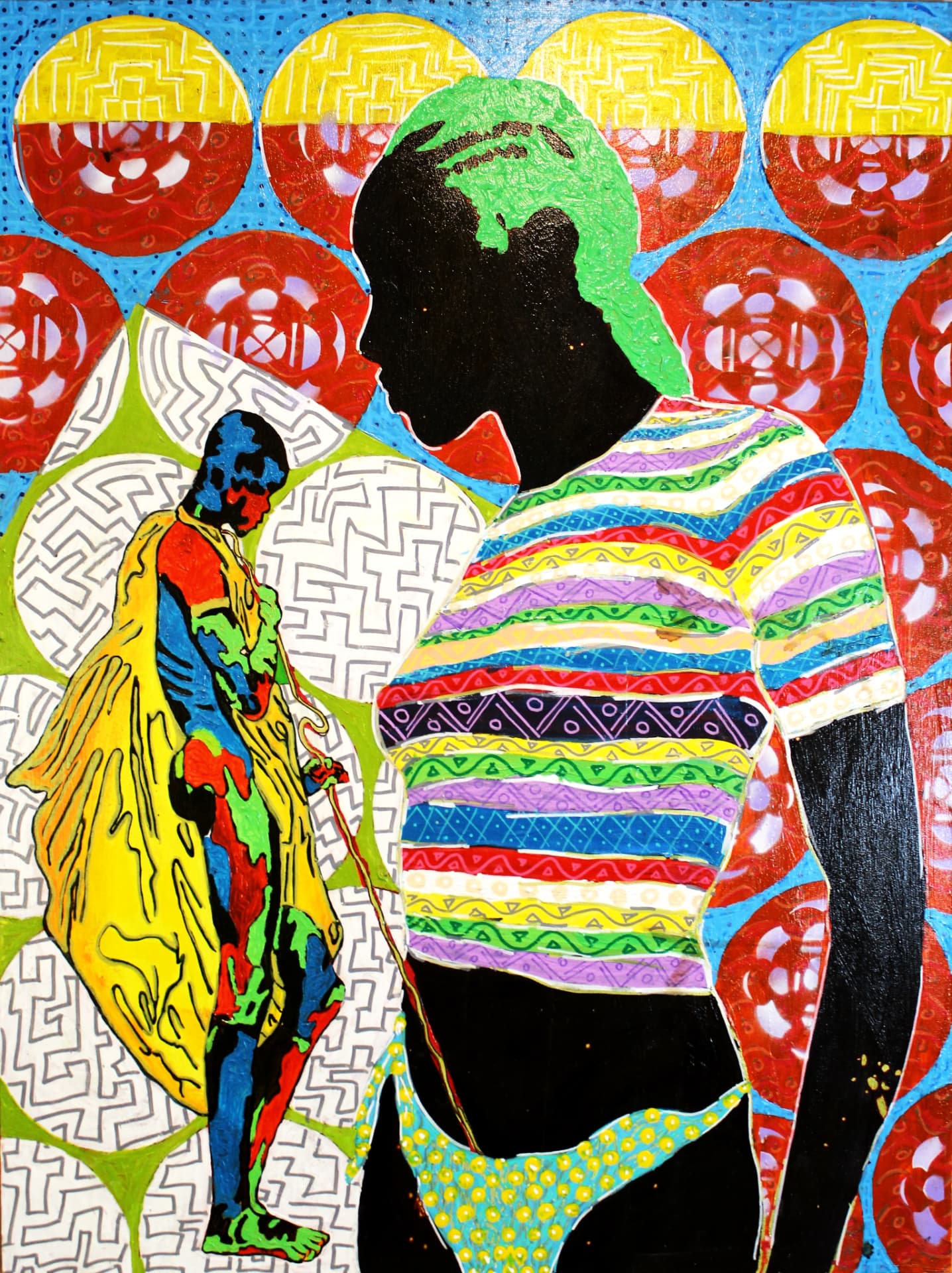
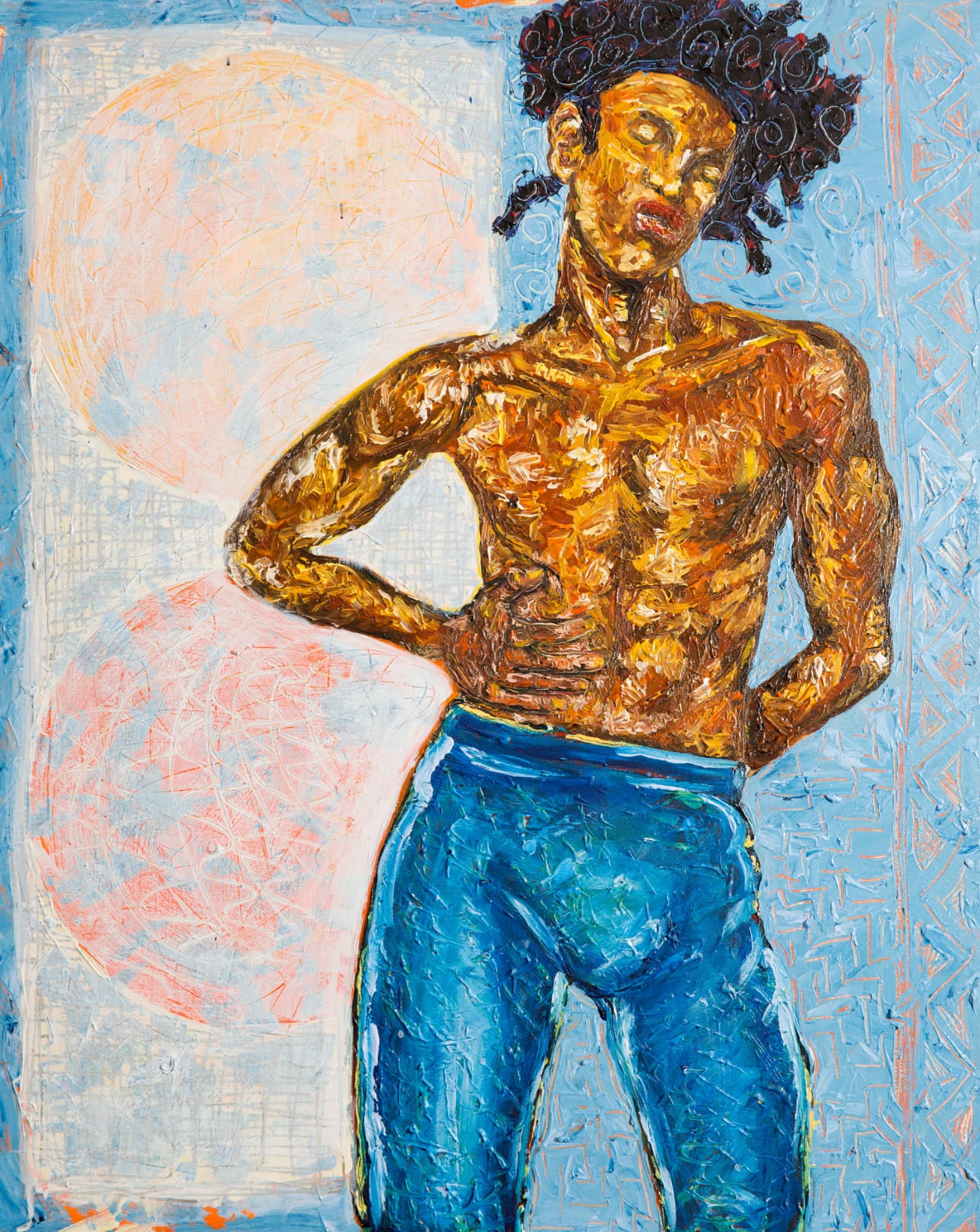
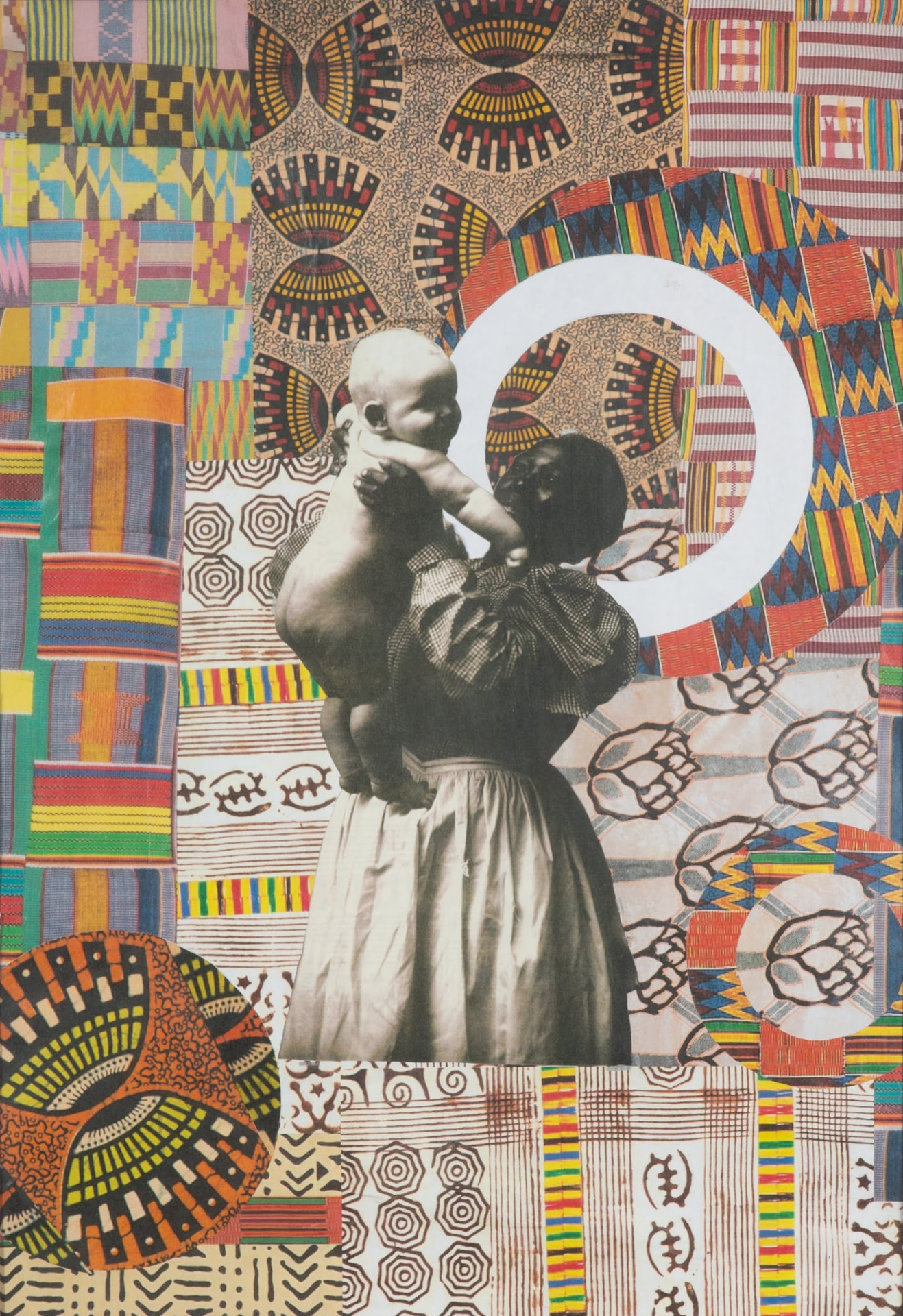
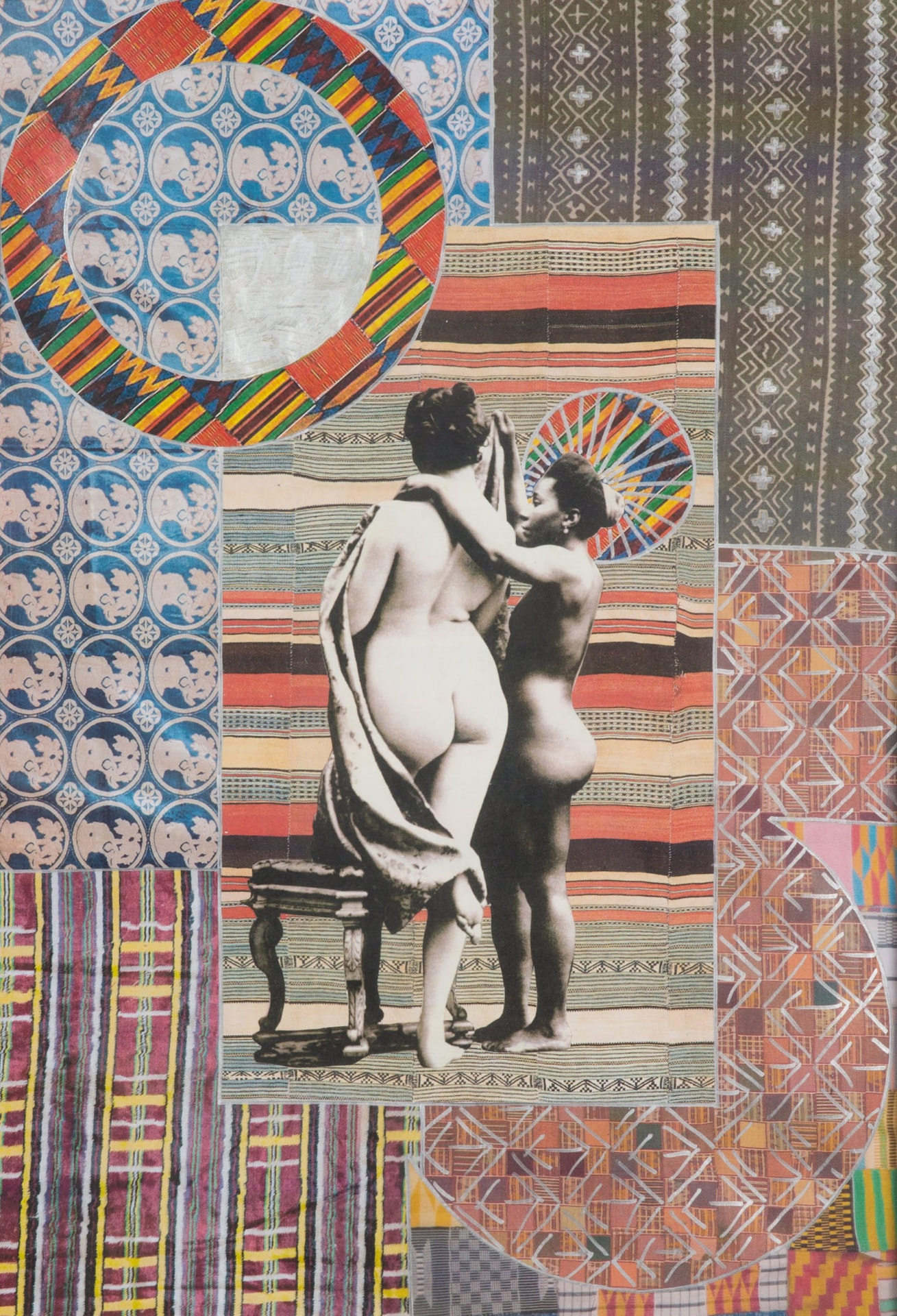
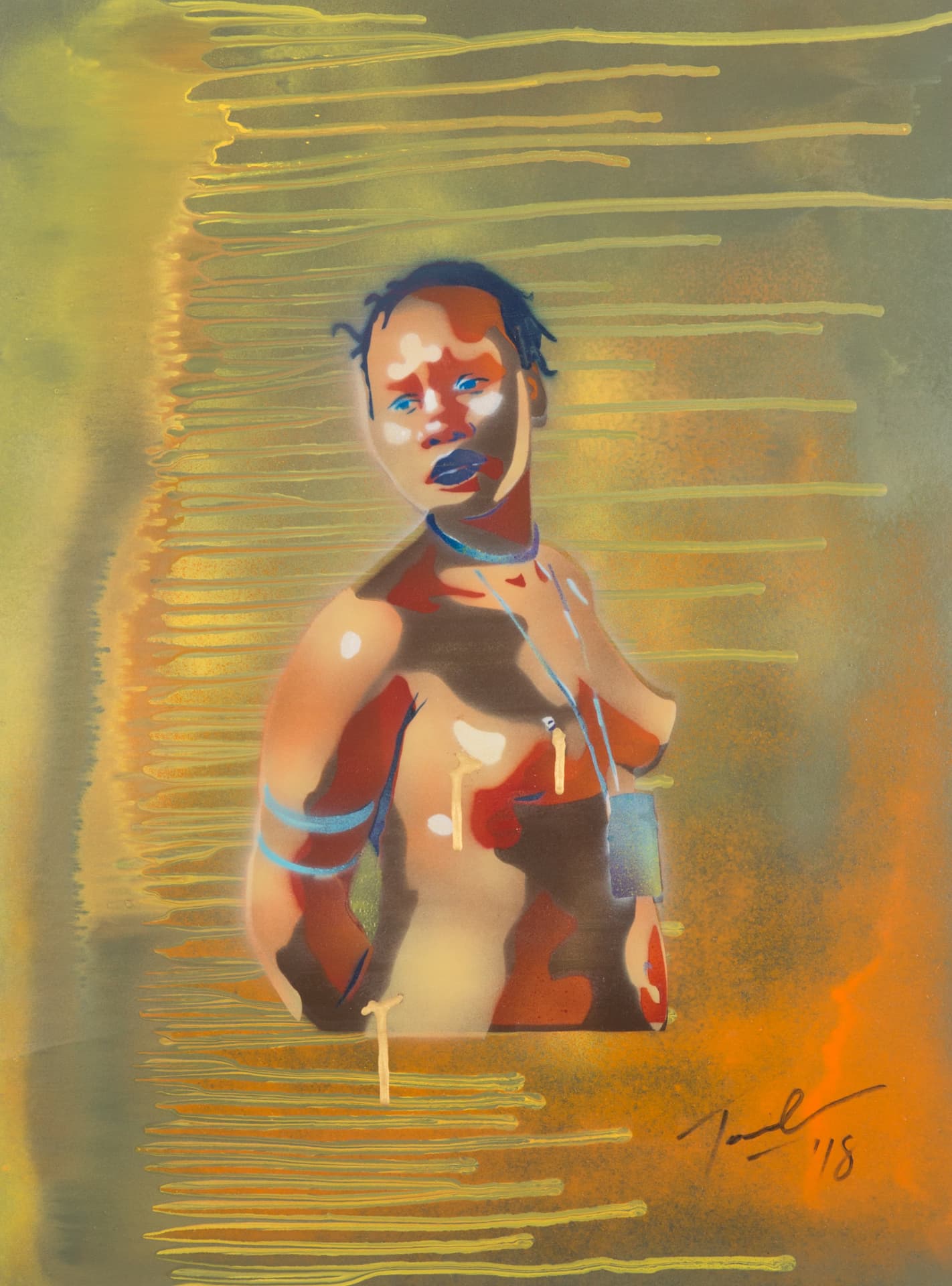
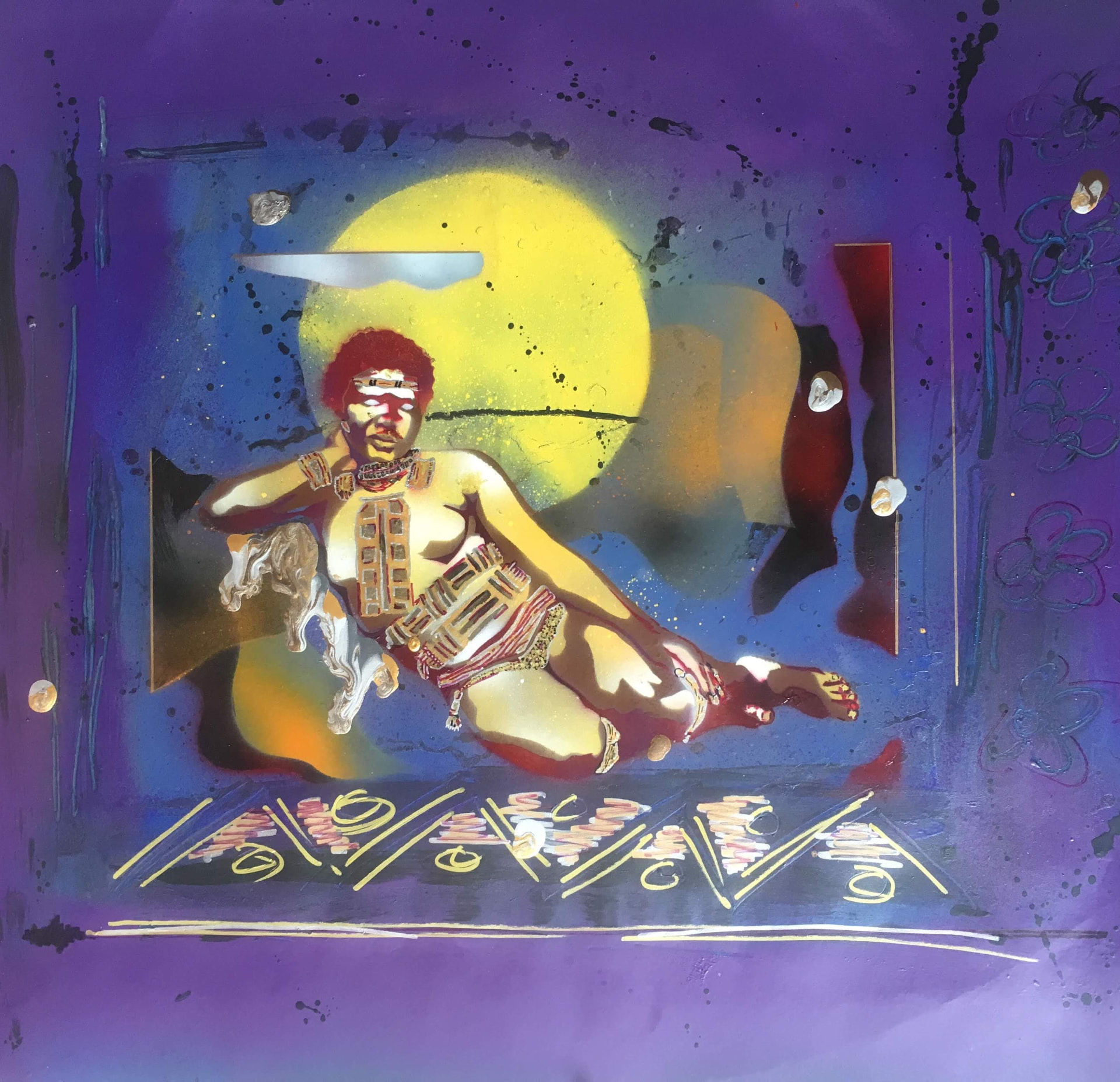
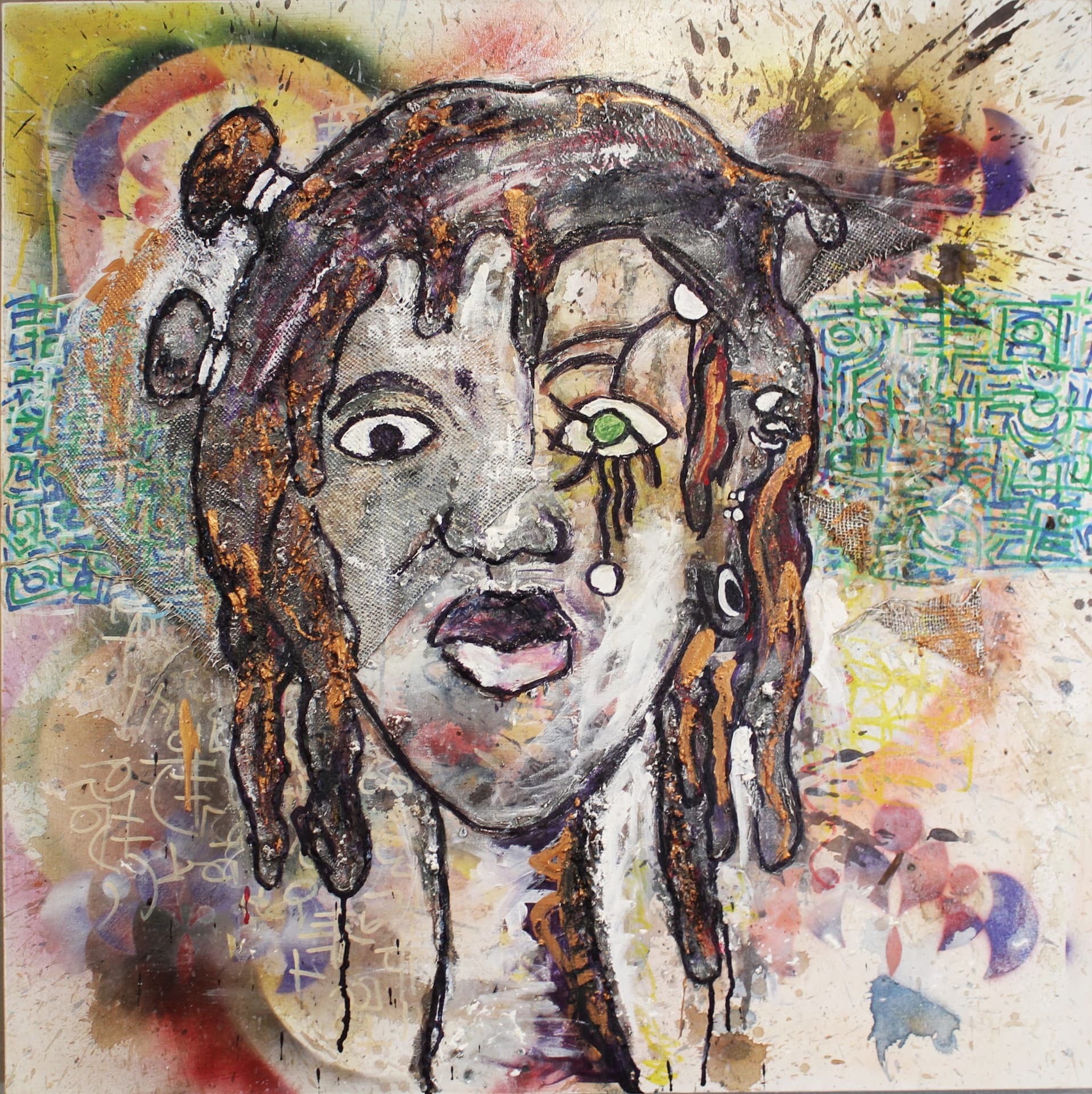
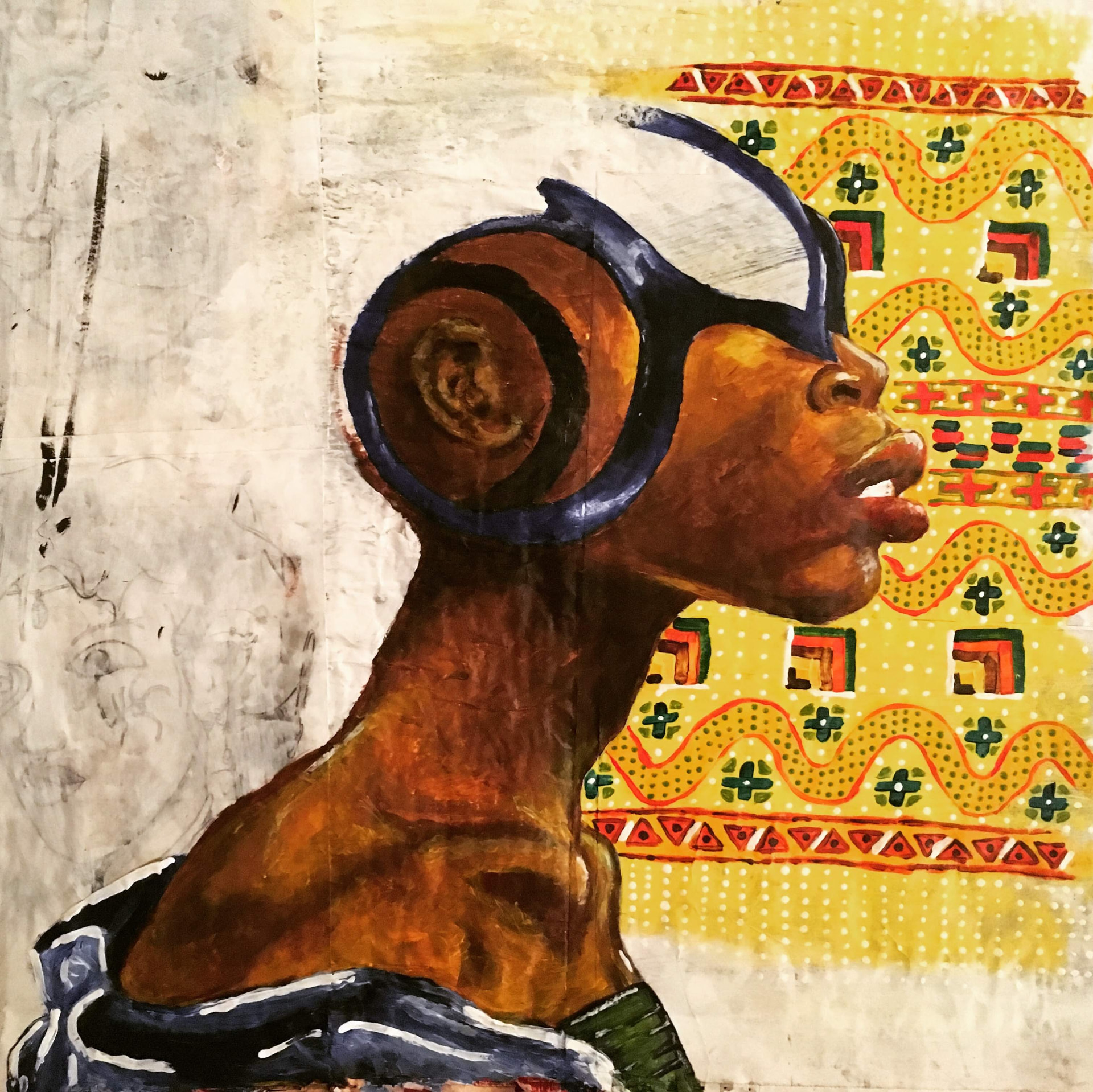
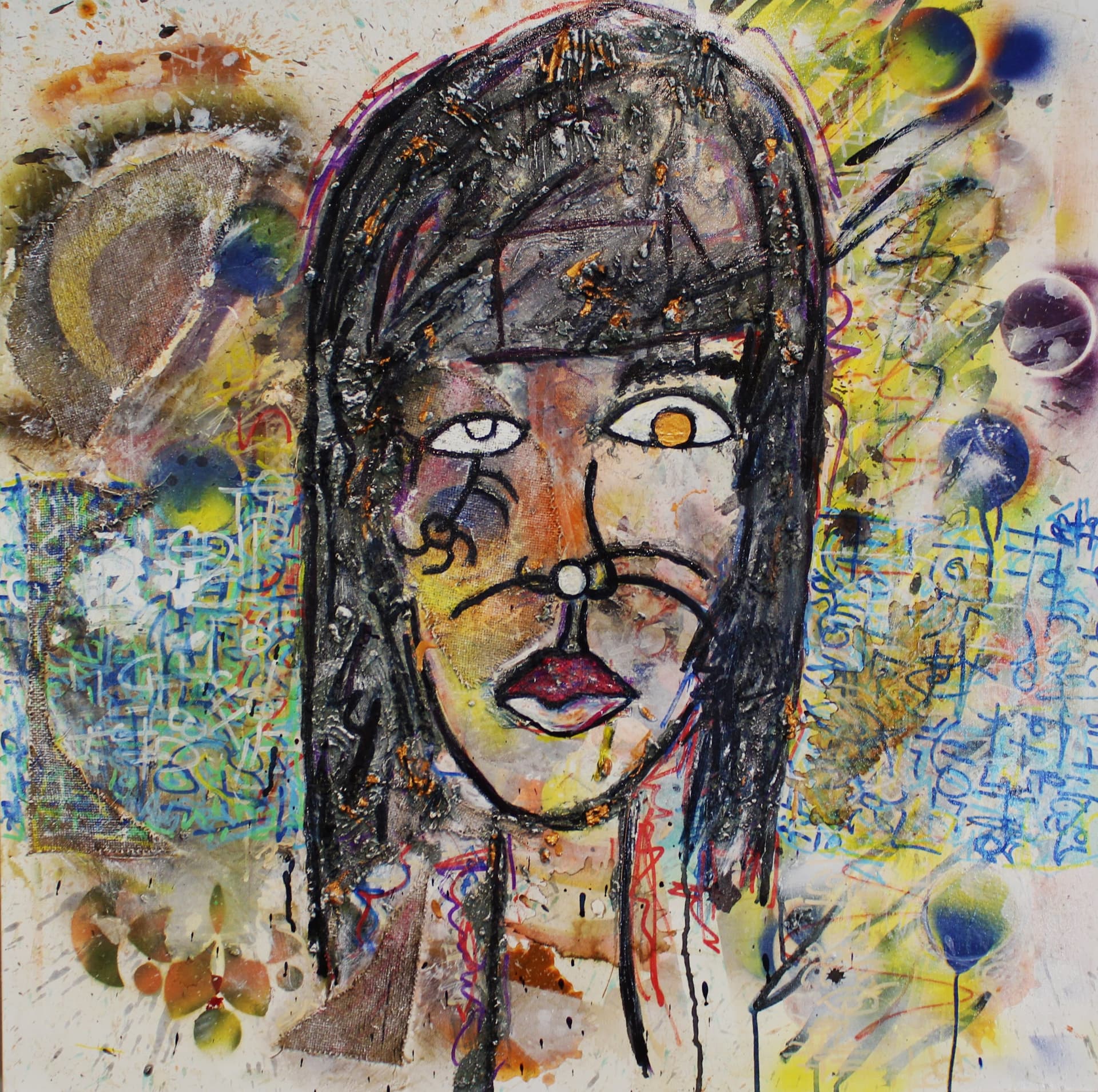
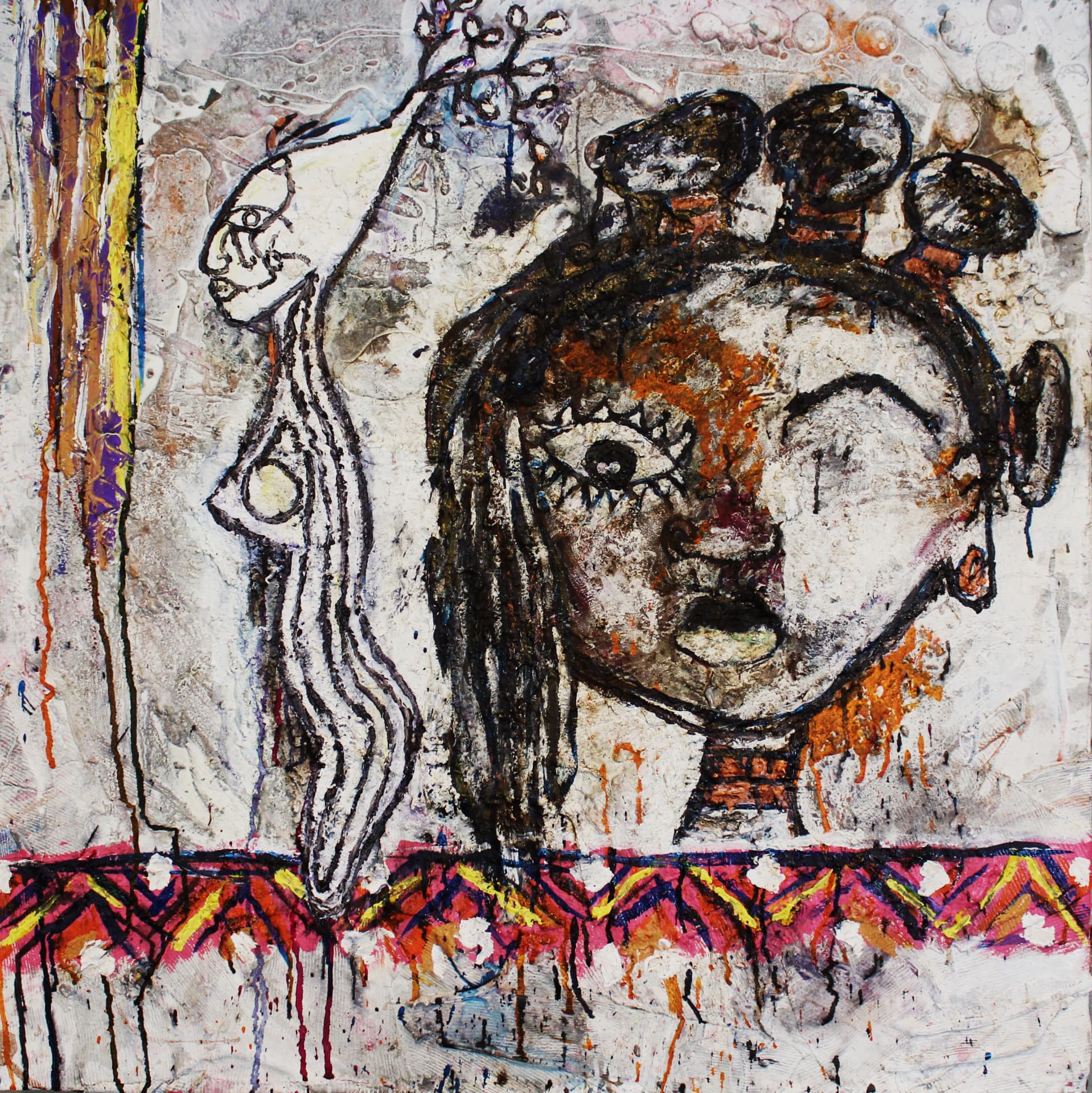
I make intimate, mixed-media paintings of people — acrylic, ink, pastel, fabric, found objects, and newspaper layered on canvas, ranging from intimate, roughly 12 by 10 inch studies to large-scale works as big as 8 by 6 feet. Many begin in an archive: I search national collections, colonial postcards, and old photographs for images that rendered Black bodies as dejected, primitive, or racialized specimens. In my ongoing series Person(hood), I paint those same figures back into full life — against dense indigenous patterning, halos, flowers, and cowrie shells, held in a moment of ritual, interior presence, and intentional becoming. Each piece is a “future-oriented act of memory.”
The work is both corrective and restorative. It is corrective because it rights an ongoing colonial wrong: the photographic archive built its authority by flattening African and Indigenous people into specimens — bodies stilled, staged, stripped of inner life. It is restorative because it heals a wound that colonial ways of seeing keep inflicting. Where the old photographs freeze their subjects, I restore motion, breath, and interiority, insisting on each figure as a full person rather than an object filed away in the catalogs of Europeanist “natural history.” The bodies I keep returning to — Black, of color, queer, and Indigenous — are the ones that colonial grammar was built to diminish.
I don't start with an idea and illustrate it — I start in the body. I'm a dancer, performance artist, and educator of Dance and Africana Studies, and I play mbira, berimbau, and other indigenous instruments; that knowledge of gesture and lived experience is how I reach for what a person holds inside. As a performance artist and embodied scholar, I'm also curious about how rhythm, breath, and sensation move through visual art — how the felt, bodily experience of looking shapes what we are able to see. Time in the studio is itself an embodied, sacred ritual, and I draw on Africana ritual objects and sculpture. My symbols carry the depth and weight of ancestral intelligence: the cowrie stands for the wisdom and beauty of indigenous African knowledge systems and also questions the notion of currency — it was once literal money — while the halo bridges Christian iconography with indigenous traditions that ring the head or heart with light.
Central to this practice is re-visioning — the ongoing rewriting and overwriting of an archive, including my own. A painting, once made, is not finished; a choreographic work, once staged, is not fixed. Both return, again and again, reworked for a new context, a new body, a new moment of discovery — the concept underneath holding steady while its form keeps changing. Re-visioning is how I deepen what I know about the self and about others; it runs through the paintings, through Ritual-iD, and through selfcraft alike.
Underneath the archive and the pattern is a search for luminosity — in Chivanhu, upenyu, the word for life itself, translates literally as a shining. The practice is one of re-spect: not admiration, but re- (again) and spect (to look) — looking again, past the surface, until that shining becomes visible.
At bottom, this work is me thinking out loud about what it means to be a person among persons in an increasingly complex world. I think of every painting as an offering and altar piece as much as an object: made for my ancestors, for the traditions I keep studying and practicing, and for anyone willing to meet a figure that asks to be seen fully rather than simply looked at.
Selected Work
Four collections
Person(hood)
Re-visions of Black, Indigenous, and Queer figures drawn from colonial and slavery archives — postcards and specimen photographs — repainted into full personhood amid wax-print patterns, halos, flowers, and cowries.
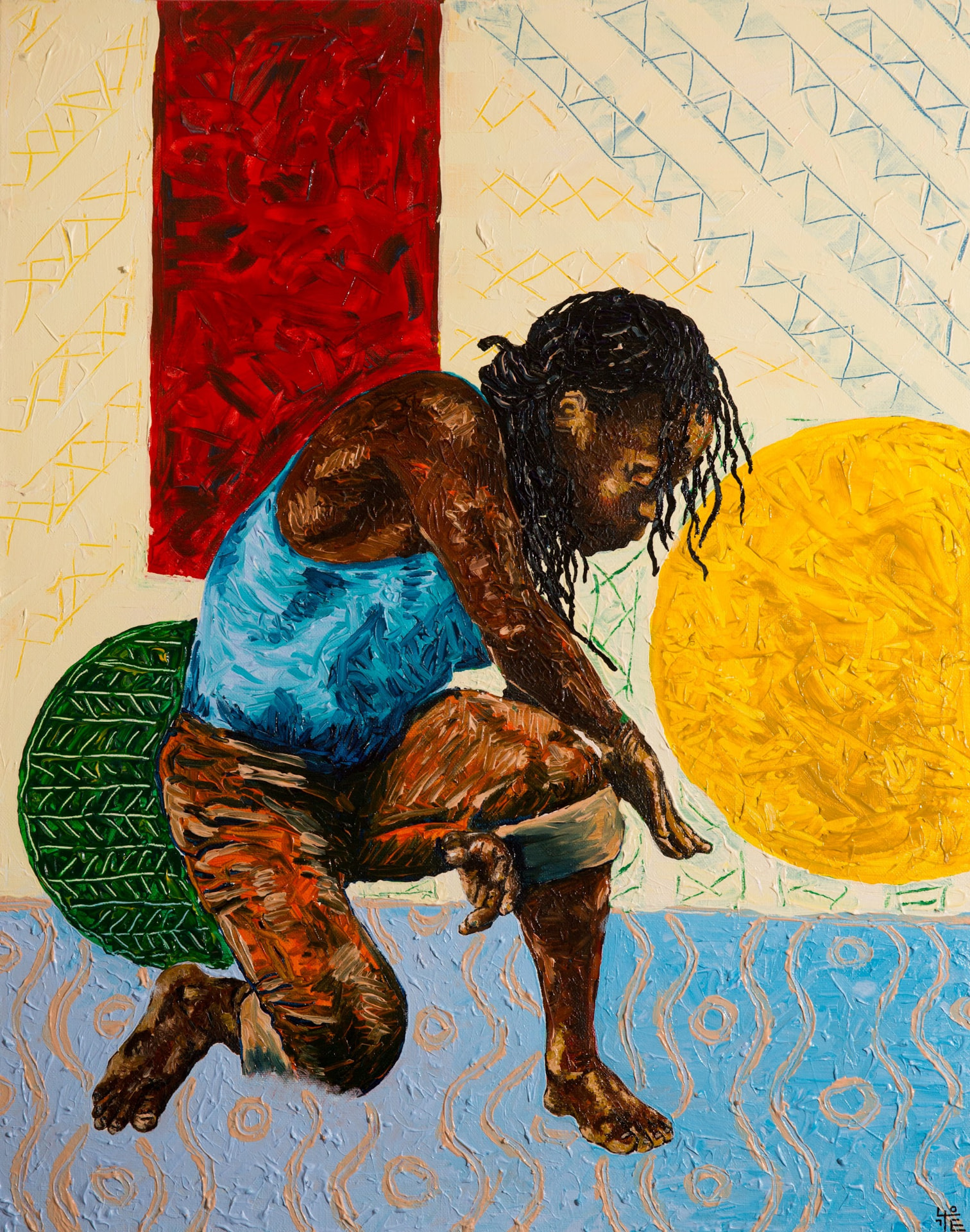
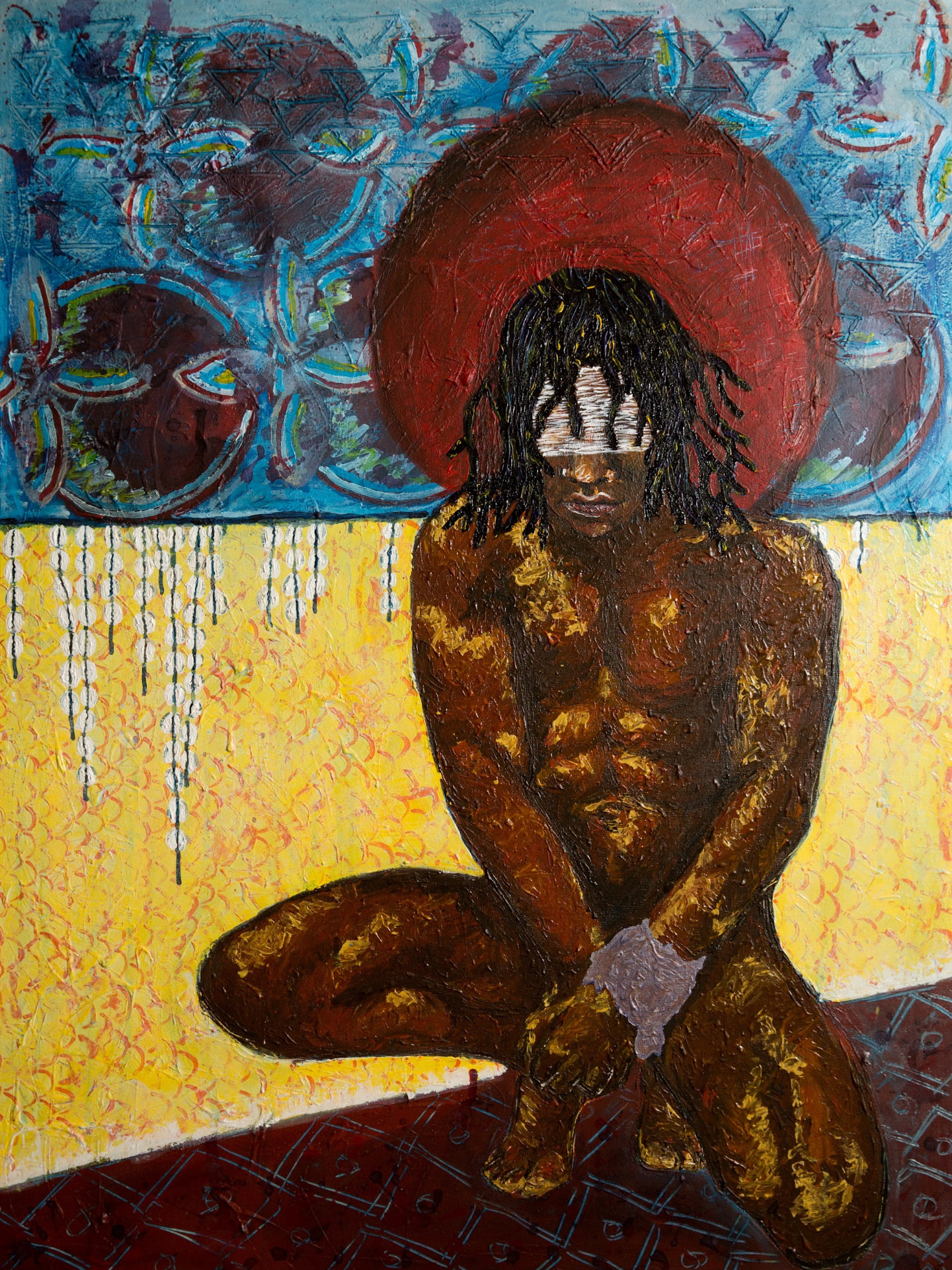
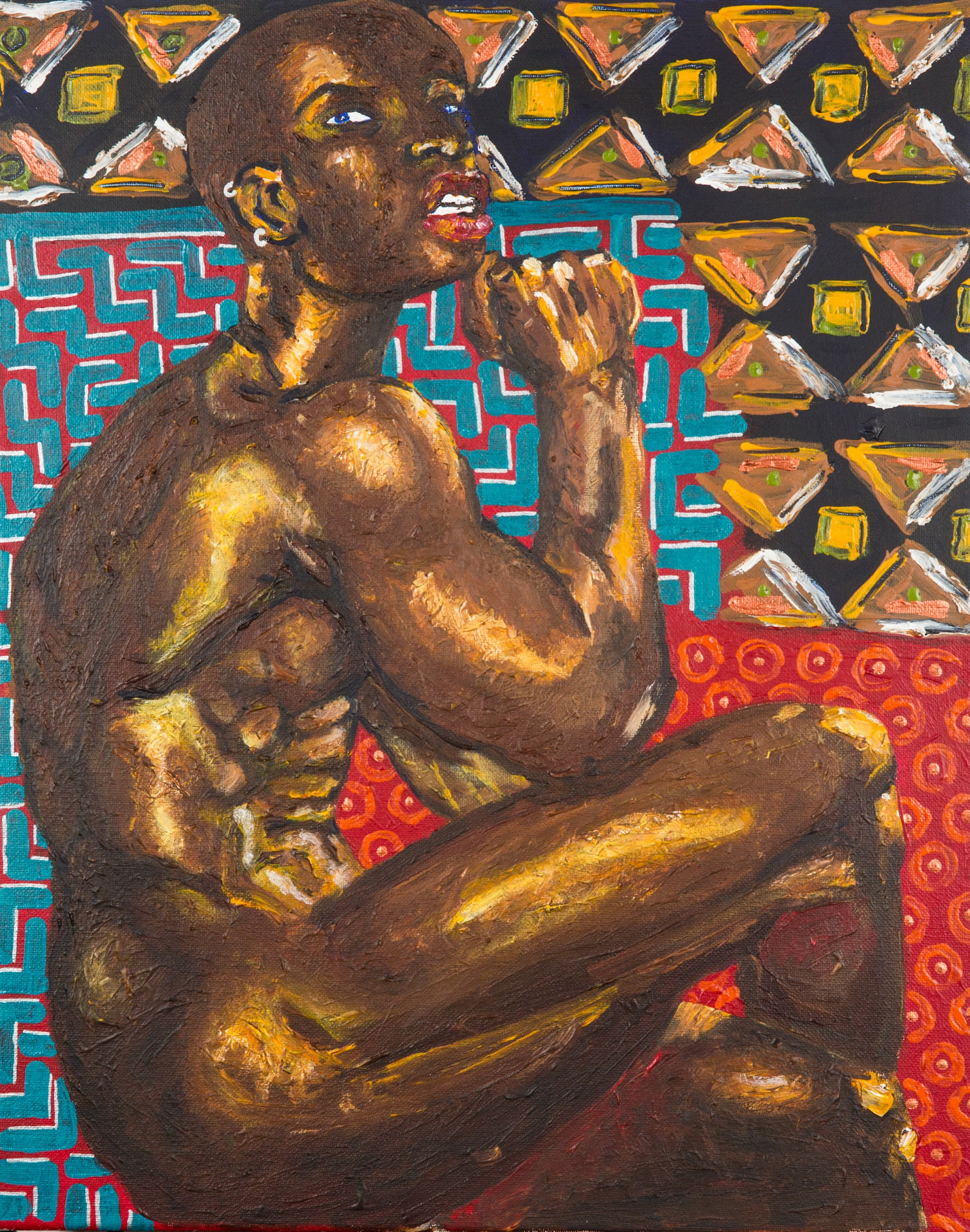
re-vision
Reworkings and returns: images seen again, with the assumptions of the first seeing stripped away. What happens when the archive is re-(en-)visioned?
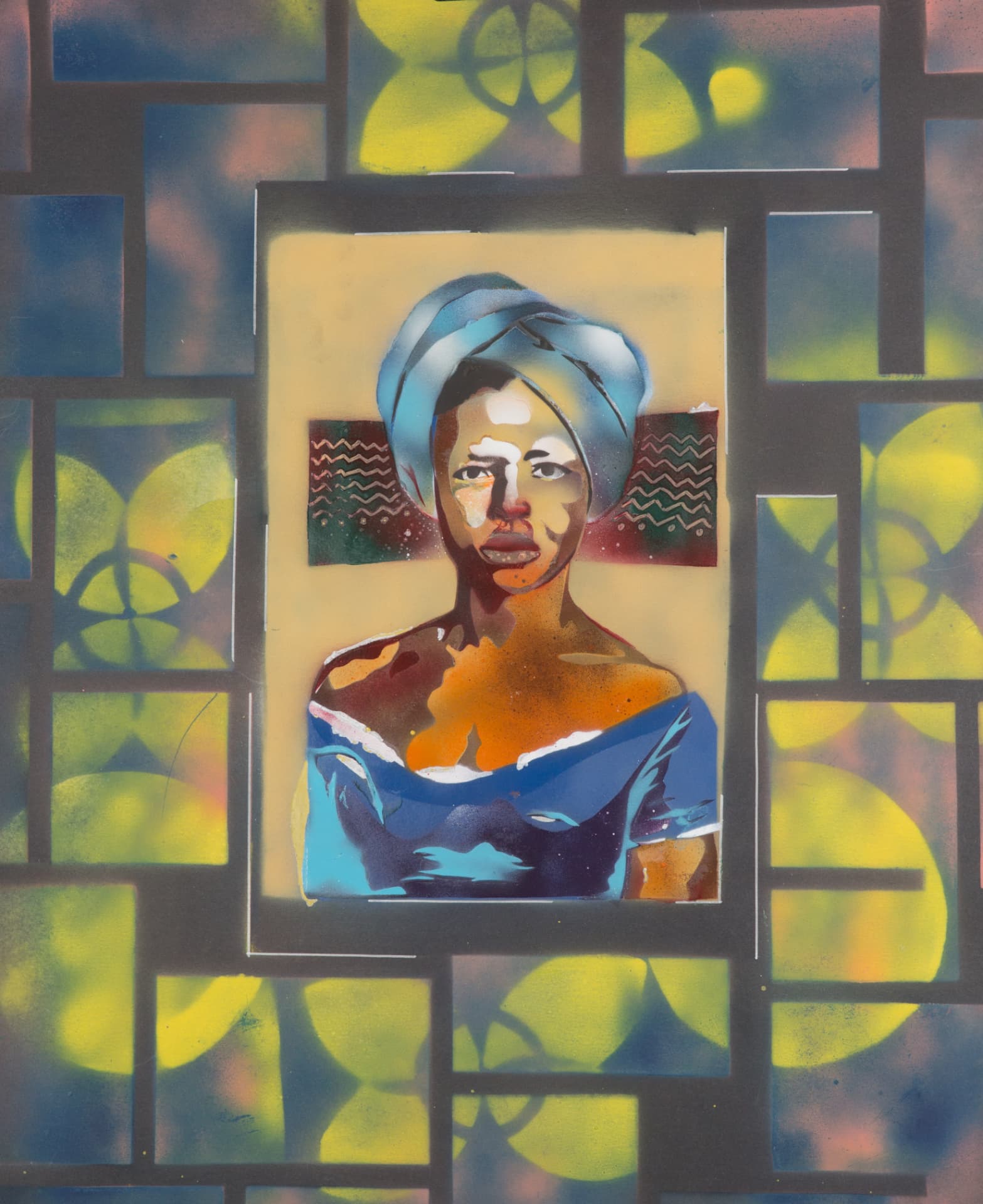
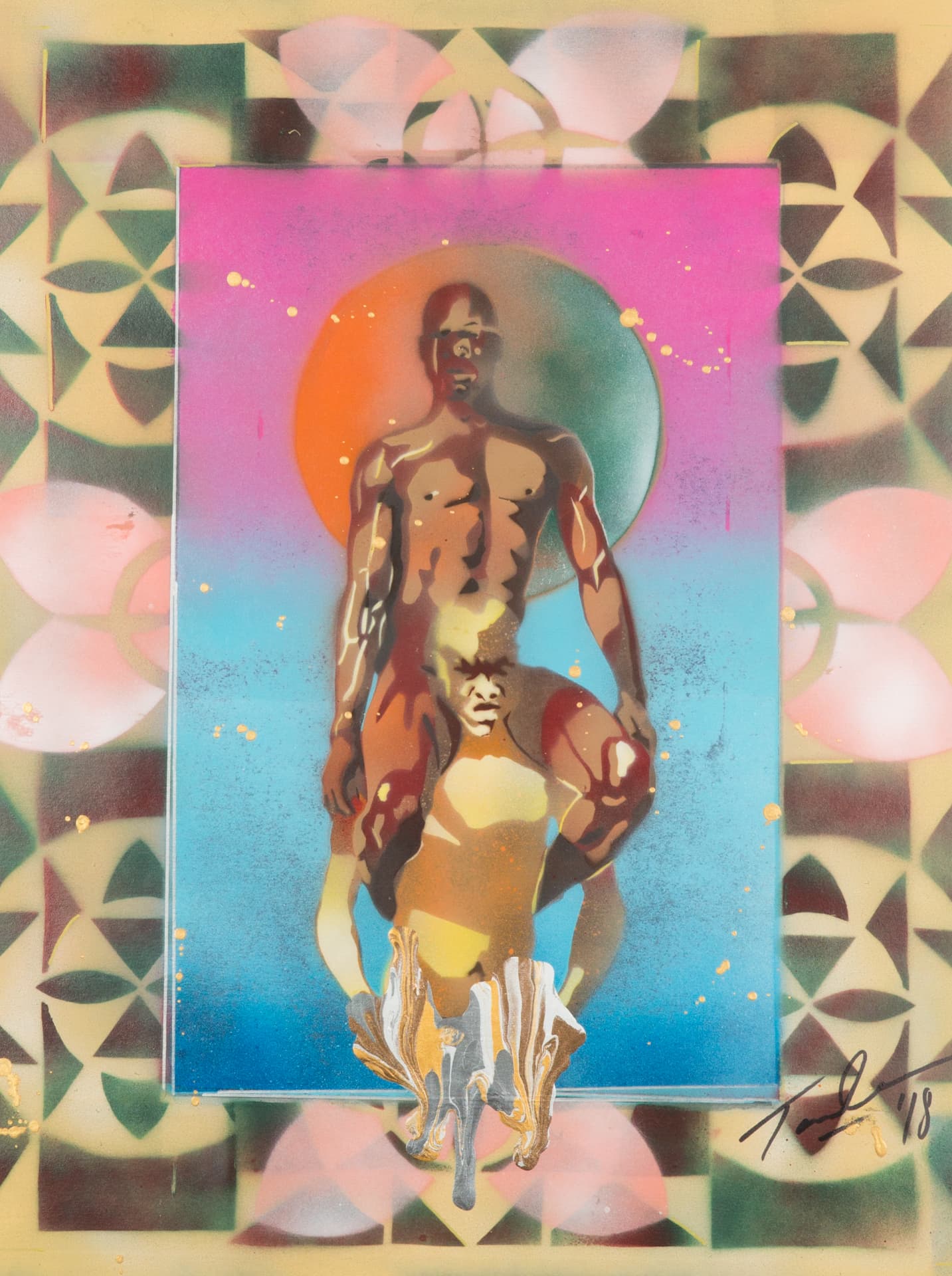
Resurgence
Bodies gathering force. Palimpsestic paintings unearthing neo-ancestral knowledge systems; rhythm as a way of knowing and ancestral continuity as an active, present-tense experience.
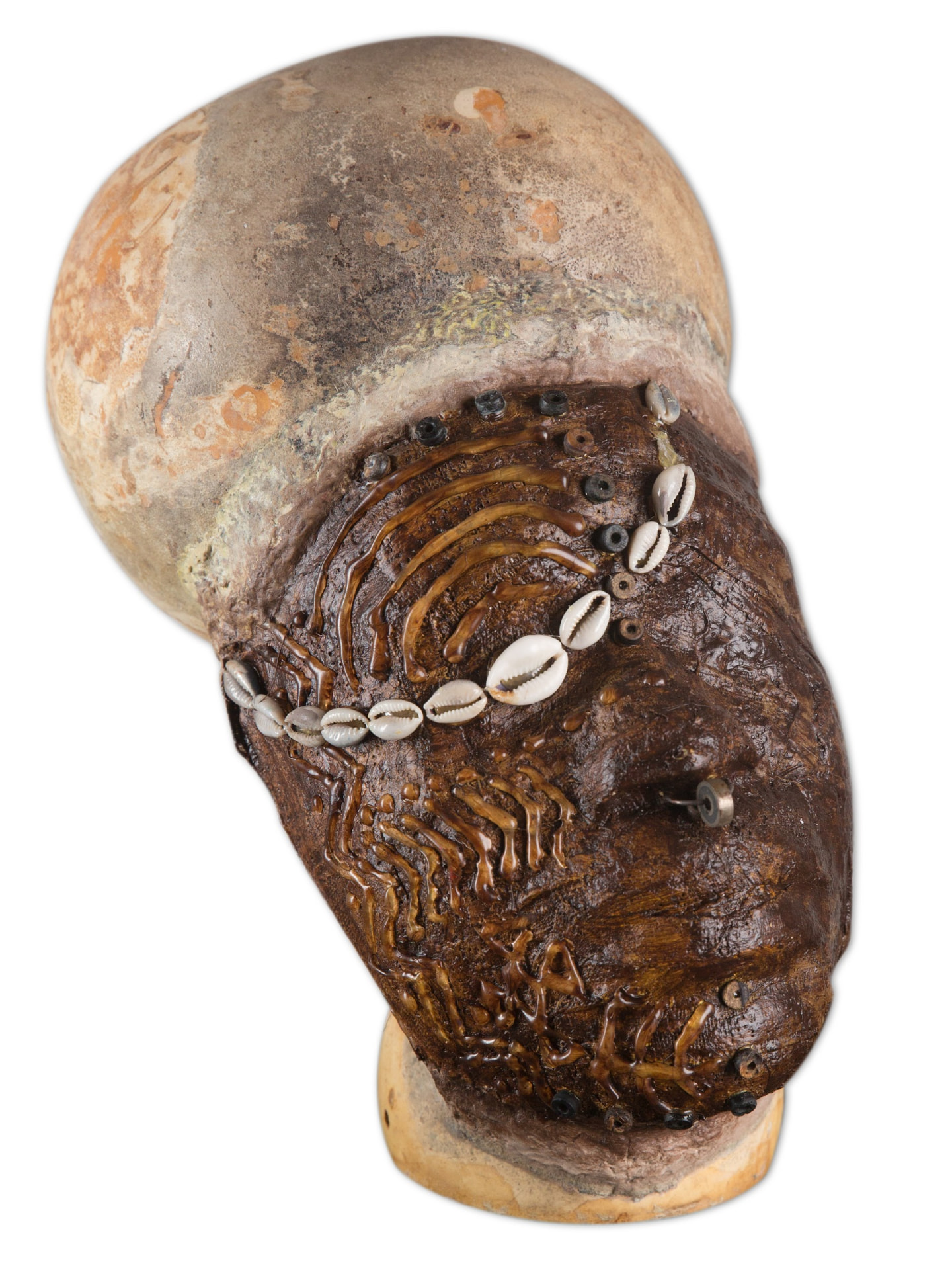
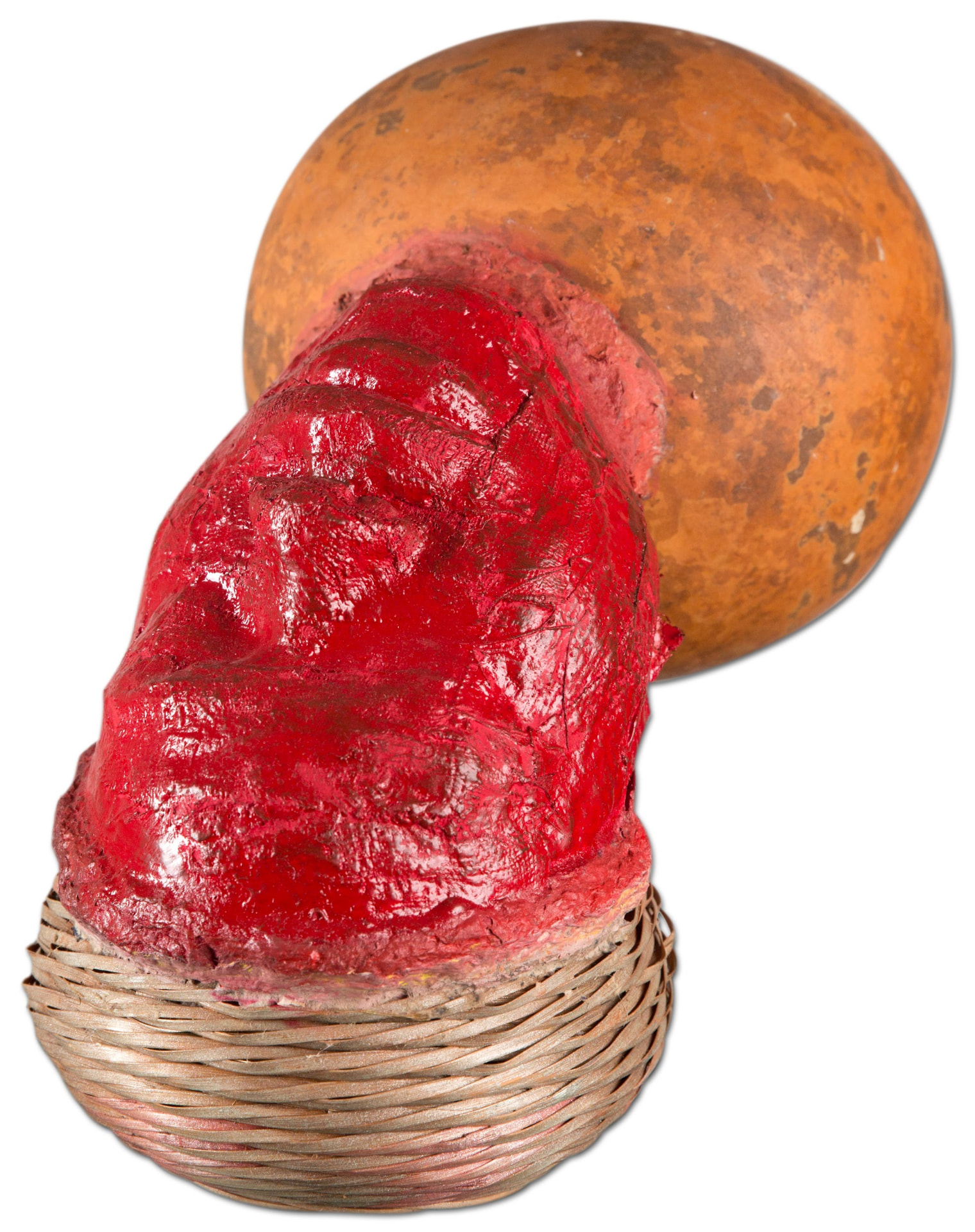
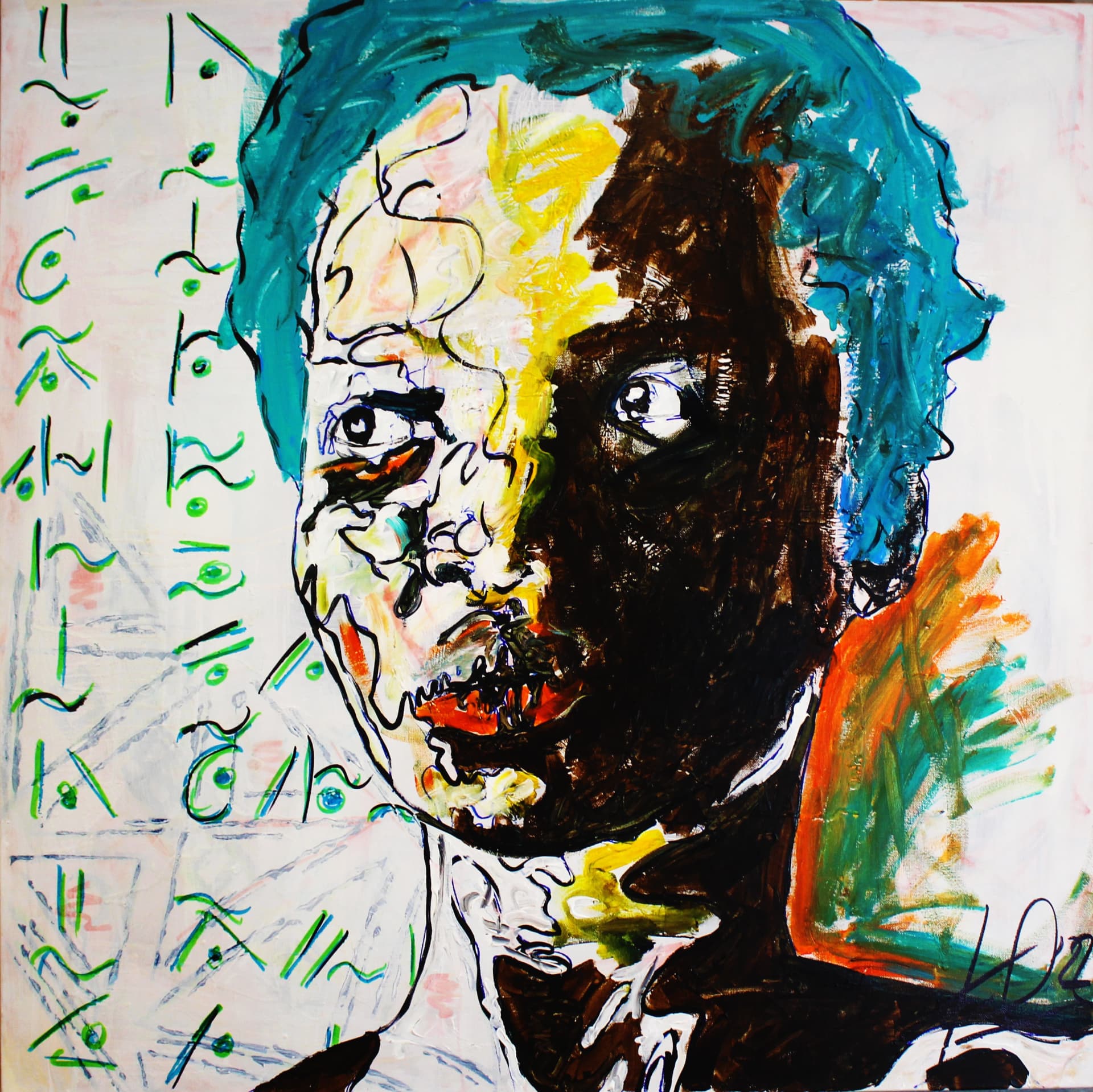
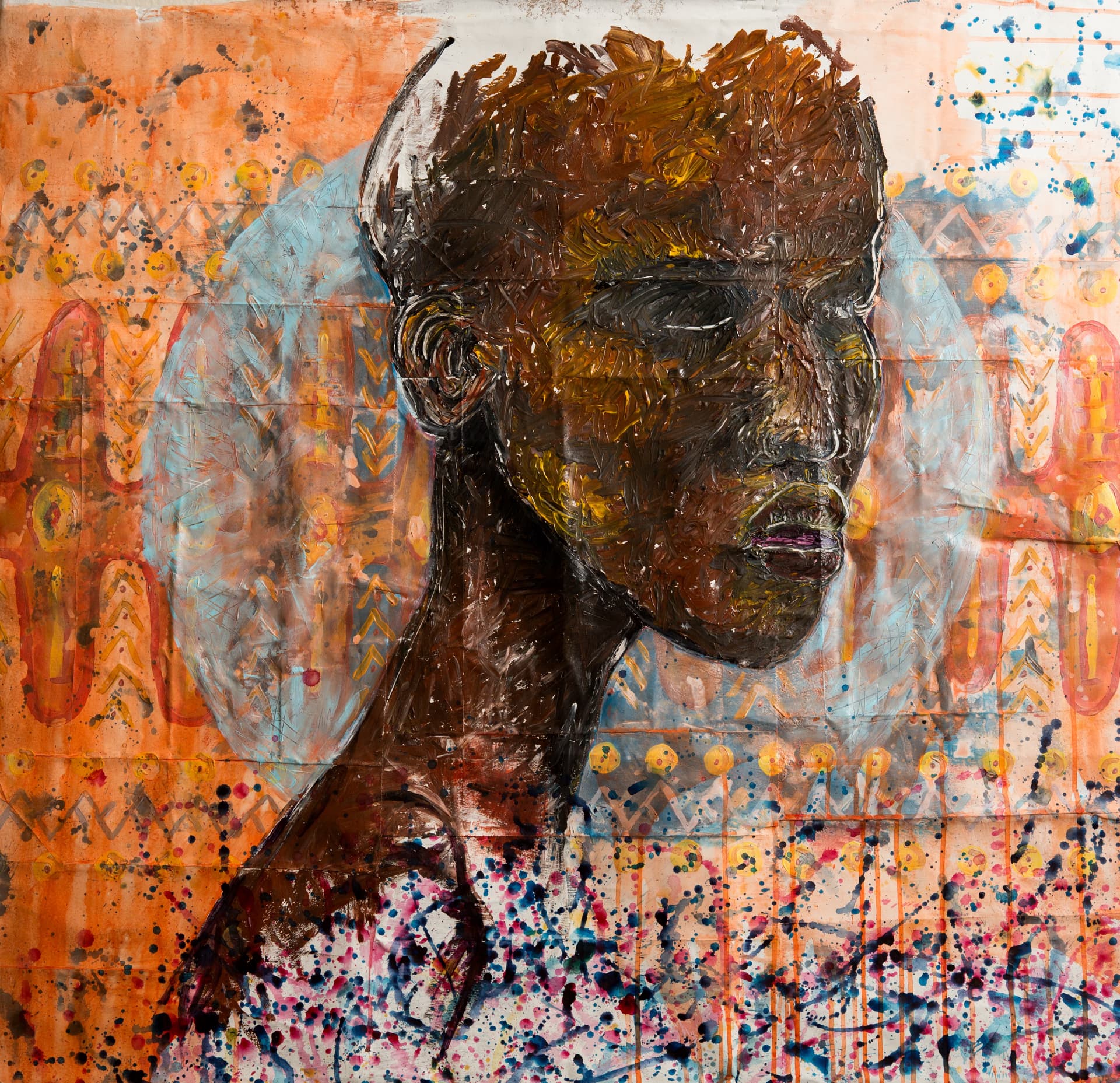
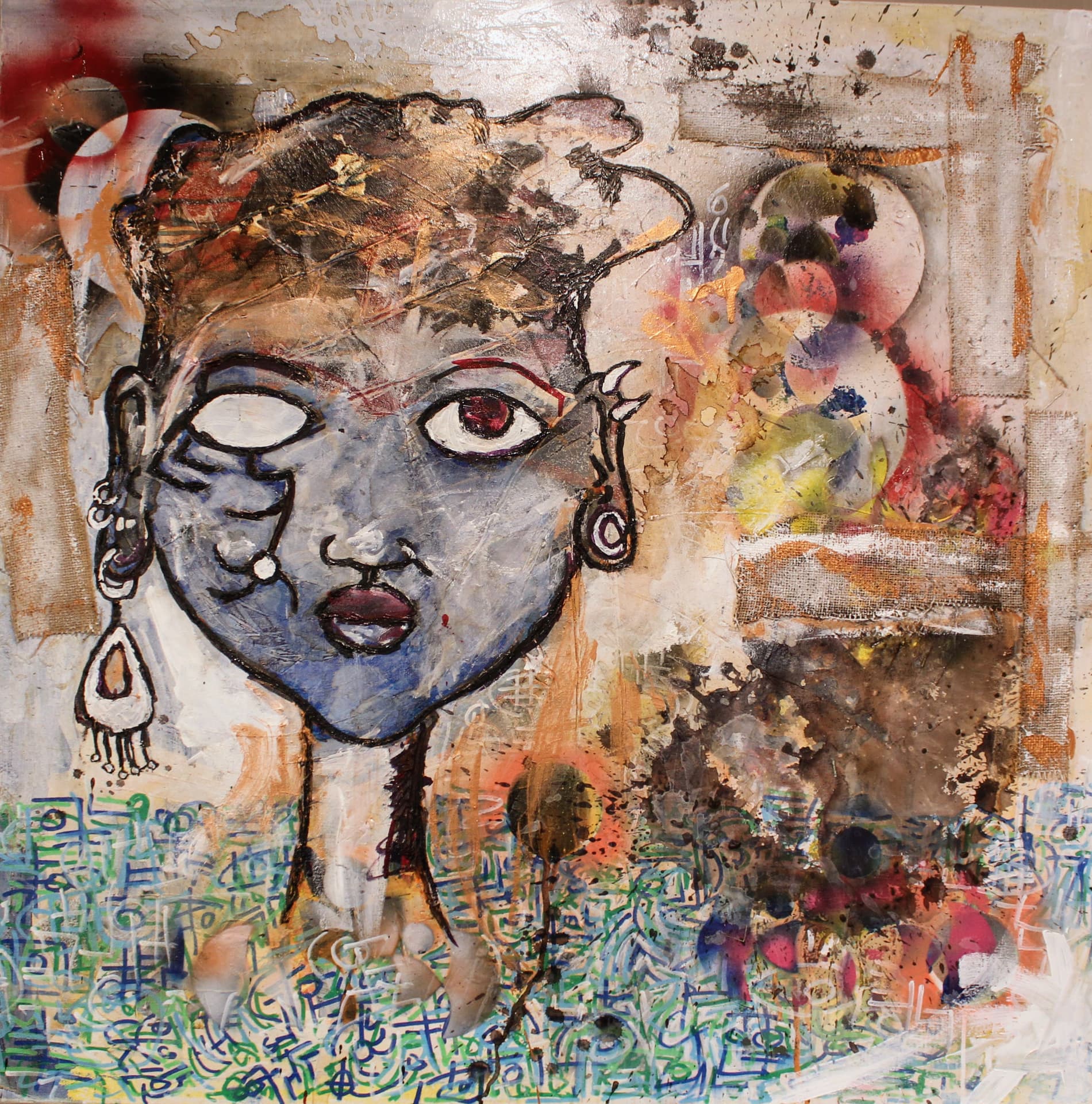
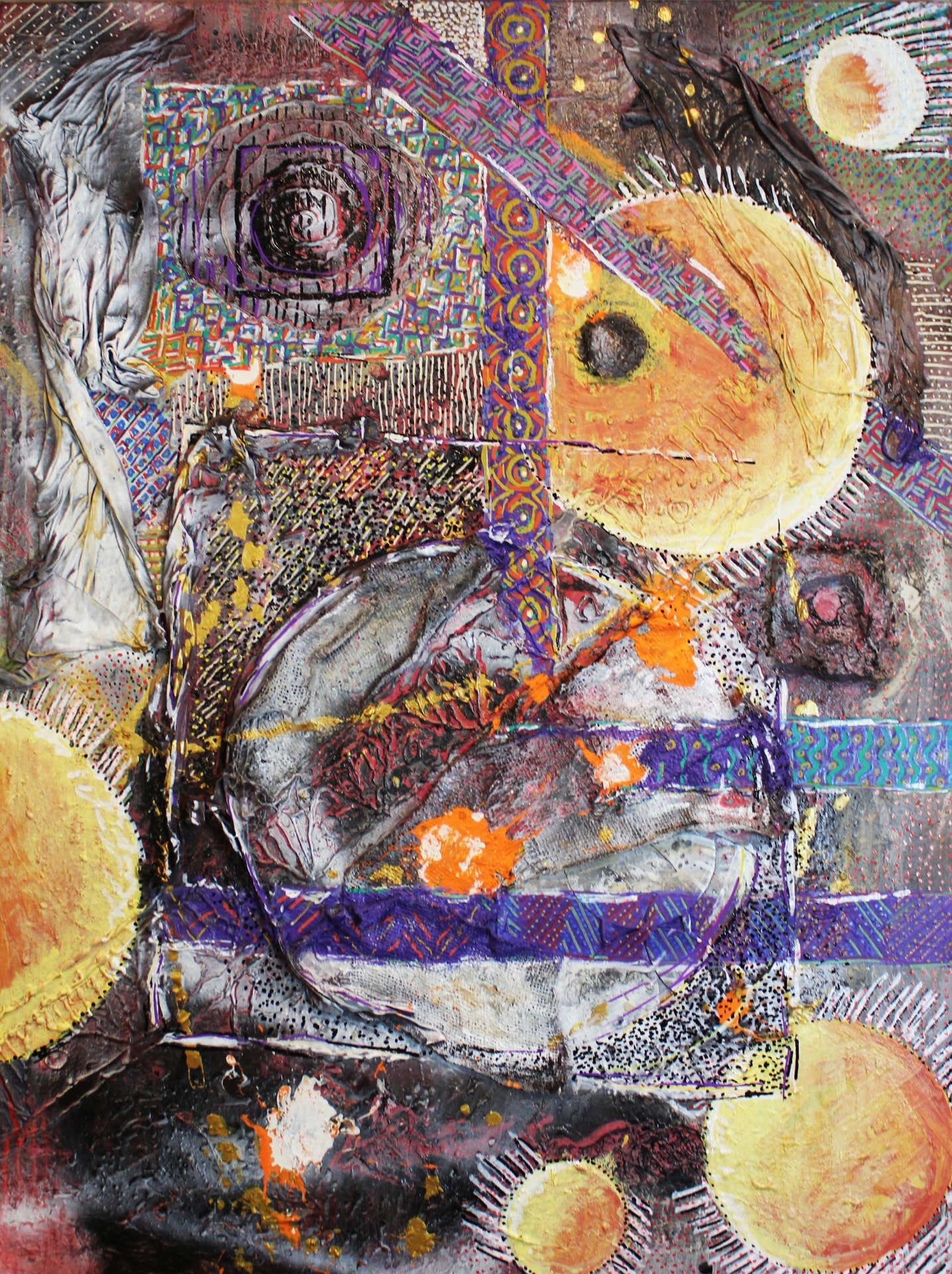
Dzimwe Dzimbo (Some/Other Songs)
A looser, more lyrical register — mark, rhythm, and surface as song rather than statement. Embodied knowledge as synesthesia.