02 — Dance & Performance

Rhythm, Breath, Sensation

Chabikwa is the creator and founder of Ritual-iD, a movement pedagogy built around Rhythm, Breath, and Sensation, developed since 2008.

Practice

Tawanda Chabikwa performing a dance pose
Photo: Craig Bortmas.

Chabikwa is the creator and founder of Ritual-iD, a movement technique and pedagogy he has developed since 2008 and named Ritual-iD at The Ohio State University. Ritual-iD treats rhythm, breath, and sensation as the three instruments a performer already carries. Rhythm organises time and relation; breath sets the scale of effort and recovery; sensation is the evidence the body offers back about what it knows. Rehearsal, in this pedagogy, is less about acquiring shapes than about becoming legible to oneself in motion.

Ritual-iD is rooted in a fusion of concepts drawn from African philosophy and from multiple indigenous African cultures — Chivanhu, Yoruba, Dagara, Bambara, and Zulu among them — brought into contemporary relevance. The practice takes indigenous African knowledge systems and allows them to be embodied: to live inside people's bodies rather than remain as material to be read about.

The work is as curious about what dancers and performers learn about themselves through the process as about what audiences learn about themselves through witnessing it. That reciprocal self-discovery is where the tenet of transformation shows up most directly in this discipline.

The works below move between concert stage, studio, and screen. Screendance is a recurring form: the camera becomes another body in the room, and editing becomes a way of thinking about how personhood is assembled from fragments. The screendance work returns often to nonlinear time — a preoccupation shared with certain Bantu indigenous cosmologies, where time is imagined not as a straight line but as a river flowing back into itself.
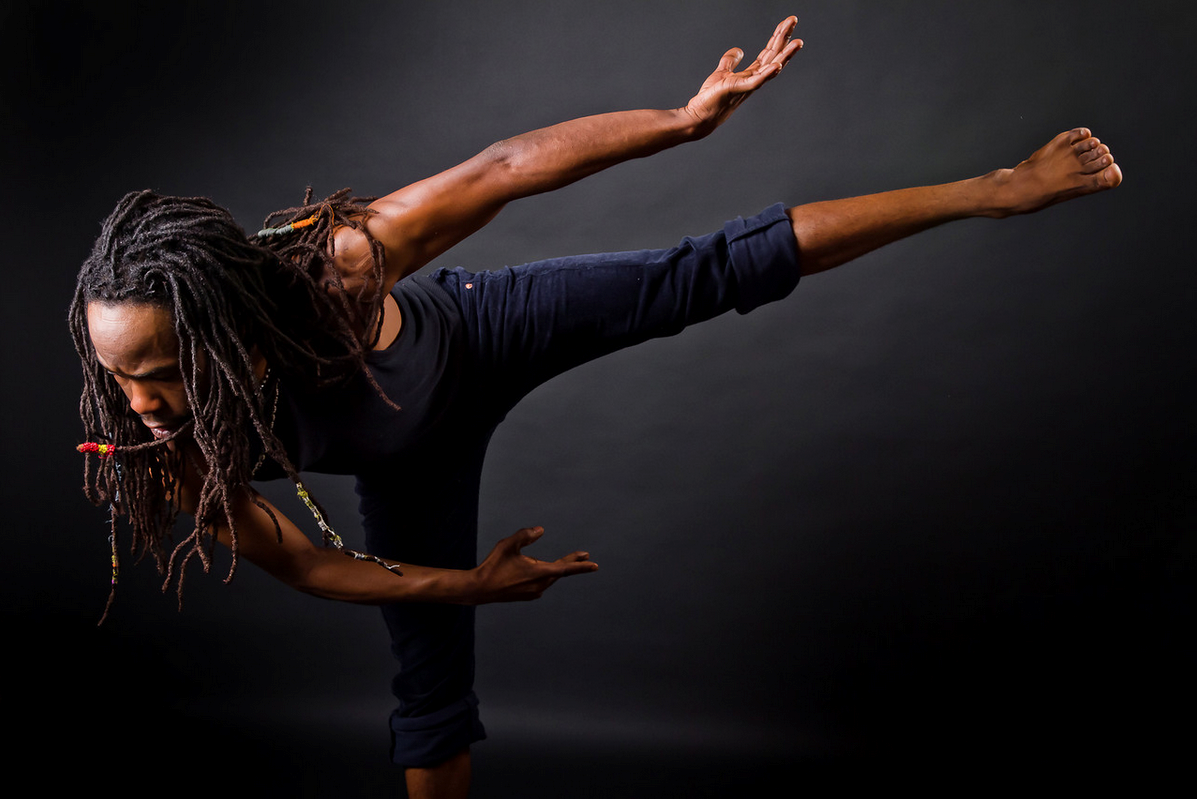
Three tenets guide every part of Chabikwa's practice — Transformation, Contemplation, and Healing — and they shape the stage as directly as the studio: performance as transformation, rehearsal as contemplation, and the work itself as healing.

Selected Works

Chronology

In development

Hanganwa (The 13th Digression)

Choreographer · UTEP Spring Dance Concert · Anticipated February 18–21, 2027

A 40–45 minute work in three parts, combining and expanding Churu, Teargas Anthem for Ernesto, and Rusero. Hanganwa means forgetfulness; the work extends that metaphor toward amnesia and memory loss.

2026

Rusero

Choreographer · University of Texas at El Paso

Rusero is the chivanhu term for the winnowing baskets used to remove chaff from harvested grain. The work contemplates the paradoxical intimacy of communal labor reinforced by care: winnowing is typically done in communities of care, and becomes a metaphor for life processes that, through patience and repetition, remove all that does not nourish self or community. When we slow down in community, can we better understand our biomythographies (Audre Lorde's term) — the things that move us from within, that inform our journey? For four dancers.

Video

2024

Churu

Choreographer · University of Texas at El Paso

  • 2024 — University of Texas at El Paso — Person(hood): UTEP Dance Festival
  • 2025 — Mini Movement Fest, Arts Mission Oak Cliff, Dallas, Texas

Termite mound as architecture and ancestor: collective labour, ground, and the slow building of a shared body. The work explores selfcraft — the extent to which we are able to create ourselves, or 'give birth to ourselves,' within and despite historical conditions, through acts of memory and of futuring. A journey of renunciation and self-emancipation.

Video

2023–2024

Person(hood): UTEP Dance Festival

Director · University of Texas at El Paso

Festival direction placing personhood and selfcraft at the centre of the programme.

2014

I Would Adorn Her

Choreographer · Barnett Theater, The Ohio State University

A solo performed by Emily Collizoli. Rusero grew out of this work.

Video

2013

Digression in the 4th Movement

Choreographer and performer · Feverhead Studio, Ohio

  • 2012 — Harare International Festival of the Arts (HIFA), Zimbabwe
  • 2013 — Feverhead Studio, Ohio

A solo performance in the Digressions series, the ongoing creative-research series Chabikwa has made since 2009.

Video

2010–2022

Teargas Anthem for Ernesto

Choreographer · Tumbuka Dance Company, Zimbabwe — originating company/production

  • 2010 — Southern Methodist University, Meadows School of the Arts, Dallas, Texas — first staged as Blanco Never Cried
  • 2012 — Tumbuka Dance Company, Zimbabwe
  • 2022 — University of Texas at El Paso, Department of Theatre & Dance

Teargas Anthem for Ernesto is a repertory work Chabikwa continually re-visions — the same practice of layering and reworking that runs through the re-vision painting series — its form shifting with each new context and cast of dancers, while the concept and meaning at its core remain constant. First staged as Blanco Never Cried (Southern Methodist University, Meadows School of the Arts, Dallas, Texas, 2010), the work was re-visioned as Teargas Anthem for Ernesto with Tumbuka Dance Company in Zimbabwe (2012), and re-visioned again at the University of Texas at El Paso (2022). The work is a dynamic rhythmic piece that plays with the idea of the group and the individual, asking how we decide what to be a part of socially, emotionally and religiously. The dancers play out a cadenced abstraction of choosing to isolate or align oneself and the meanings we make of belonging to groups. It uses the basic rhythmic pattern of the Chinyambira dance of the Masvingo region of Zimbabwe. An artistic response to the violence of the Zimbabwean political process and the xenophobic attacks on Zimbabwean refugees in South Africa, focused on how tensions manifest in social groupings and how cycles of inclusion and exclusion perpetuate themselves.

Video

2010

Inheritance: Dunhu reMhondoro

Choreographer · Southern Methodist University, Dallas, Texas

Six dancers; music, video, and Max/MSP by Chabikwa. The work illustrates his interest in intermedia performance and the beginnings of his use of technological interfaces in choreography, and speaks to his creative research's epistemological grounding in African and African diasporic conceptual systems.

Video

2006

Color Me Africa

Choreographer · College of the Atlantic, Bar Harbor, Maine

Evening-length performance for 13 dancers, made as undergraduate work through an independent study.

Process film

Process films

Choreographic Research

Choreographic Research (2005–present): a short documentary-style process film attends each piece Chabikwa makes, part of a standing commitment to dance literacy and audience development around Afrikan contemporary dance practice.

Watch all process films on Vimeo

Watch the process films →

Screendance

Digressions

Digressions (2009–present) is an ongoing series of creative-research short films, created and screened in varied locations and contexts.

Digression #3: Stone & Mist/Preparing

Pedagogy

Teaching sample

Movement Practice Class. An example of a contemporary dance class and of the principles of group dynamics a learning community aspires toward, showing the dynamics between Chabikwa and the course participants. He offers a range of interdisciplinary movement courses for dancers and non-dancers centered on transformation, contemplation and healing — for co-created performance, community building, self-empowerment, health equity, and bringing attention to the body as a resource in daily life or personal creative practice.

Media

Archive & enquiries

Performance documentation and screendance excerpts are catalogued alongside each work above. Full-length footage is available on request for presenters and programmers.